Gold Bug Variations

By Richard Powers

ALL POSTS CONTAIN SPOILERS

So, if you’ve been in a bookstore any time in the past six months, you’ve probably walked past Richard Powers’ ‘The Overstory‘ featured prominently on the Best Sellers rack, or the Notable New Fiction table, or the Staff Recommendations shelf. It’s a Big Deal Book at the moment: it won the 2019 Pulitzer for Fiction, and it’s a novel about people whose lives are touched by…trees. Or something like that, I haven’t read it, but the back cover assures me that it’s a powerful story about the destruction of the natural world.

Which, is it just me, or does that not sound super smug? It sounds like a novel that exists to make NPR listeners feel good about themselves. Like a novel specifically designed to end up on the Staff Recommendations tables in liberal enclaves.

In the interests of full disclosure: I’m not super interested in reading ‘The Overstory‘ – I’m perhaps willing to give it a shot, but before I read a smug-sounding five hundred page novel about trees, I’d like to know whether or not I even like the author.

Richard Powers has written eleven other novels, the most famous of which is ‘Gold Bug Variations‘, which is described on its own back cover this way:

“‘The Goldbug Variations’ is a double love story of two young couples separated by a distance of twenty-five years. Stuart Ressler, a brilliant young molecular biologist, sets out in 1975 to crack the genetic code. His efforts are sidetracked by other, more intractable codes – social, moral, musical, spiritual – and he falls in love with a member of his research team. Years later, another young man and woman team up to investigate a different scientific mystery – why did the eminently promising Ressler suddenly disappear from the world of science? Strand by strand, these two love stories twist about each other in a double helix of desire.”

So I decided to read that first. The subject matter appealed to me (not all the love and desire stuff – I don’t so much go in for that), but all the biology. I am here for biology – it’s what I do for a living. I’m not generally wild about love stories, but I’m super down to read a six hundred page novel about the scientific elucidation of the genetic code. I’m a big nerd and I’m excited.

At least in theory.

In practice, I pretty much hated ‘Gold Bug Variations‘. I really hated it, actually. I hated it the way you hate books that you really, really hate: where every increment you read, every chapter, every paragraph, you hate it more, in a curve which grows exponentially, so that by the time you finish it, you hate it miles, miles more than you thought it was possible to hate, more than is reasonable.

Gold Bug Variations‘ was well-reviewed, but I have a sneaking suspicion that critics, some critics at least, don’t know the difference between a good book and a verbose book. Between a book that has something to say and a book that has a lot to say.

Gold Bug Variations‘ has a lot to say, or, rather, it says what it has to say at length. Partly, it accomplishes this by saying the same things over and over and over and over. Powers is…exhausting. His prose is bloated and repetitive and smug. He doesn’t say anything once if he can say 10,000 times. He gets carried away with enthusiasm, yes, for his subject matter but also for his own prose gymnastics, his own powers of prose description.

I feel slightly guilty about faulting Powers for this because a) I am also verbose and b) it clearly stems from a deep love of subject matter. I share his love of this subject matter, and I sympathize, but the love isn’t the problem – the problem is that Powers has an undisciplined need to communicate this love to the reader through what I can only describe as verbal force.

“I would tell Todd, spell it out in a five-thousand-volume letter. I would say how I have seen, close up, what Ressler wanted to crack through to. How I have felt it, sustained the chase in myself. How the urge to strip the noise from the cipher is always the desire to say what it means to be able to say anything, to read some part of what is written here, without resort to intermediaries. To get to the generating spark, to follow the score extracted from the split lark. I would tell him, at least, sparing nothing, just what in the impregnable sum of journal articles sent Ressler quietly away, appalled, stunted with wonder.

I would tell him everything I have found. I would lay my notebooks open to him. How the helix is not a description at all, but just the infolded germ of a scaffolding organism whose function is to promote and preserve the art treasure that erects it. How the four-base language is both more and less than plan. How it comprises secret writing in the fullest sense, possessing all the infinite, extendable, constricting possibilities lying hidden in the parts of speech. How there is always a go-between, a sign between signature and nature.” (p. 515)

This is garbage. It’s purple, overlong, self-indulgent, and it borders on incoherent. It’s also what most of the book is like. I bet I have at least as much love and respect for the workings of heredity as as Richard Powers, and I can tell you that wading through hundreds of pages of this drivel was excruciating.

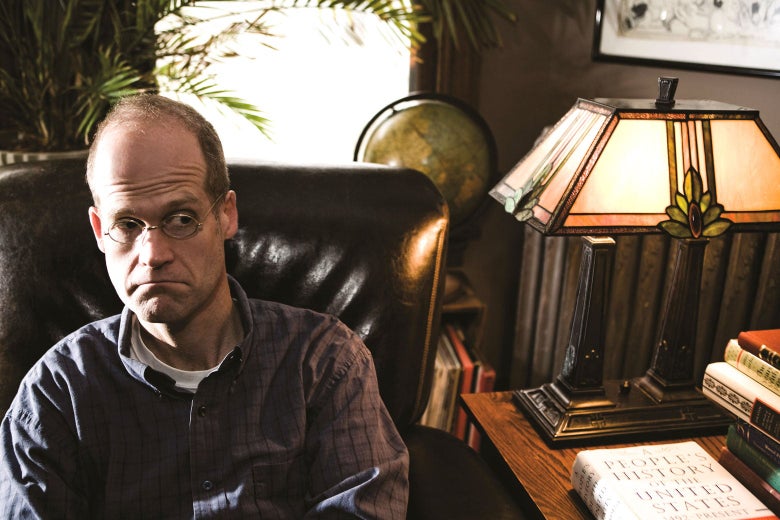
Richard Powers

I’m sure I’m over-reacting. Maybe it isn’t fair to have such a strong aversion to someone’s writing style that you can’t even make a reasonable evaluation of their story, or their characters. But this writing is arduous. And it’s hard not to resent it for being so arduous when it feels as though the only problem is that Richard Powers, who is clearly a very imaginative and articulate person, just didn’t have the self-discipline to stop repeating himself.

And it makes it impossible to care about the plot, or about the characters, about the love stories or emotional journeys of anyone involved. By page 100, I was just holding on until the end – this was an endurance trial. This is one of those books that I only finished because I have a rule about finishing books that I start.

In my opinion, this is the greatest sin a writer can commit: letting his own pleasure in his verbiage overwhelm what’s best for the story, or the reader. It is unforgivable, letting your own pride come before the needs of the writing. I cannot forgive this in a writer, and I honestly cannot remember another writer who is this badly afflicted.

It is worth remembering that Powers was a youngish-writer when he wrote ‘Gold Bug Variations‘, and I will never hang a writer on one work. Maybe he’s gotten better, calmer, sparer. Maybe he’s employed an editor since 1991. I’m not damning the man – I’m damning the novel.

But I can tell you this: I will need a lot of convincing before read this man’s damn tree novel.

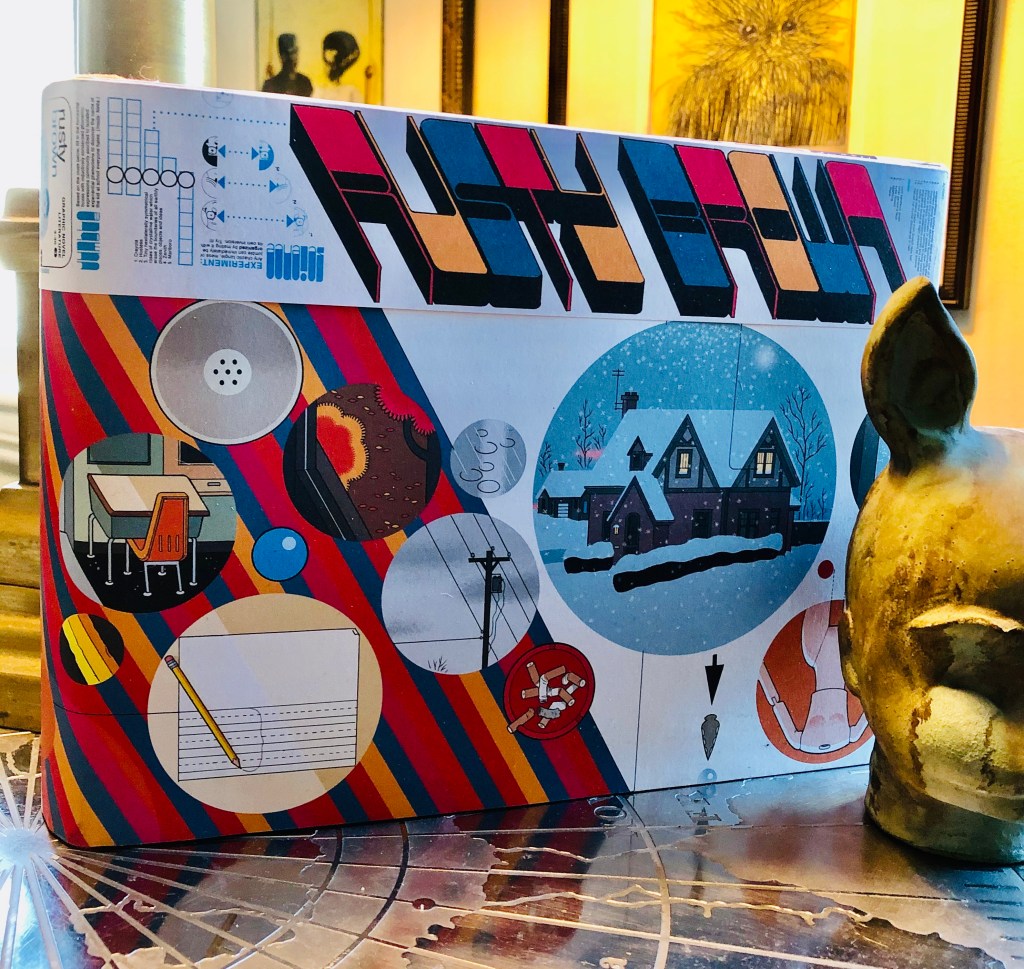
Rusty Brown

By Chris Ware

ALL POSTS CONTAIN SPOILERS

I’ve never read a graphic novel before.

This isn’t a principled stance I’ve taken – I know the whole spiel about how graphic novels are novels, and they are High Art now, and they are very sophisticated and deal with adult themes. I’m not disputing any of this – how could I? I’ve never read one.

Art evolves, and I’m completely fine with that. I know that sounds defensive, but that’s only because it’s in print, on the internet: I really am fine with that. I have watched completely open-mindedly as the graphic novel has become mainstream and achieved artistic legitimacy. I think it’s a good thing – I think more inclusive artistic definitions almost always benefit the form, and the culture, over time. They accelerate growth.

But I have never read a graphic novel, again, not because I have a problem with them – not at all! – but because…I don’t like them.

I don’t like reading them, and ‘reading’ is the operative word there. I think they’re often beautiful, visually sumptuous and mesmerizing to look at. But I have been reading for a long time, and I am used to the flow of words on a page. On a page that doesn’t have a ton else on it, a page where, if there are pictures (which there almost never are), the words arrange themselves tidily around the pictures and don’t scatter themselves through it.

I find graphic novels a little difficult to read. That may be the point, right? It might be that the difficulty of finding and ordering the words, visually, is designed to make you slow down and look at the pictures. It may be that this actually makes you take in the words more deliberately, makes you pay more attention.

But I do not, viscerally, enjoy the drag on my mind. I am used to ease when reading, total mental comfort. The ability to immerse myself, mentally, effortlessly, in a text, is one of the things I love about reading. It’s almost meditative. It feels like swimming. So I have found the new proliferation of graphic novels amazingly easy to resist.

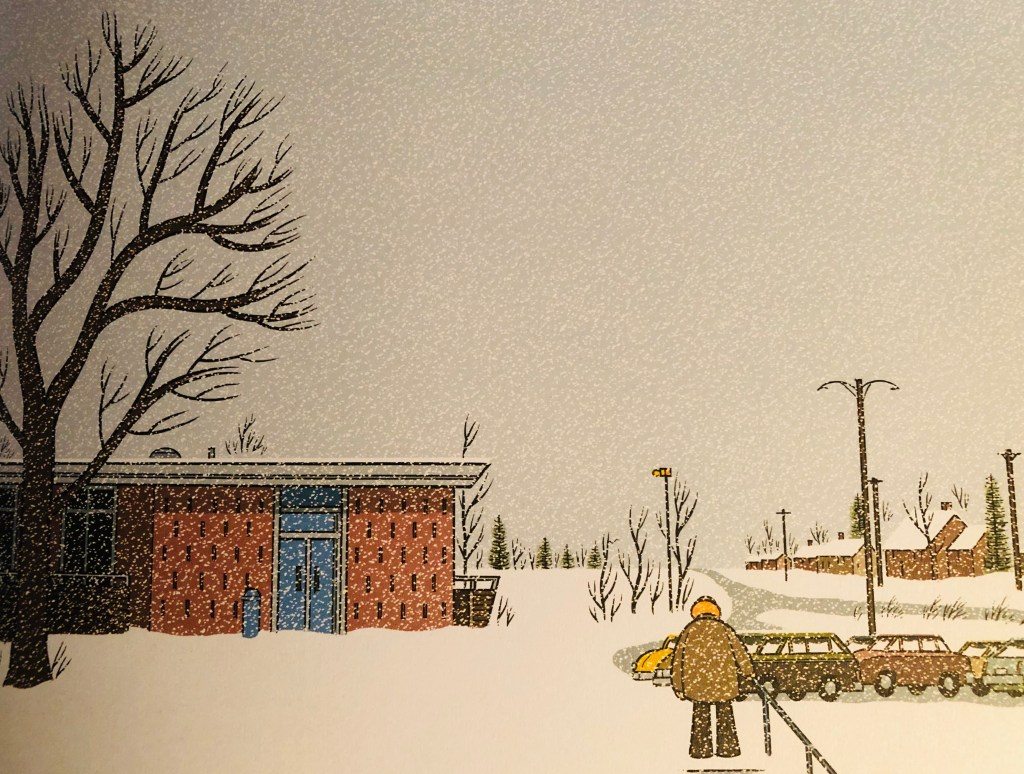
But my mother gave me ‘Rusty Brown‘ for Christmas this past year, explaining (sort of apologetically) that it got really good reviews*. And it is gorgeous, with amazing, complex layouts and lush, arresting pictures. So, the other day, when I was totally fried from work and wanted to try something a little different, I sat down and read it.
*My mother was completely correct, by the way: the reviews for ‘Rusty Brown‘ are ecstatic.

And now I have a question: how am I supposed to feel about this book?

I’m not asking what I’m supposed to feel: happy, sad, existentially frantic. I’m asking how I’m supposed to feel: am I supposed to feel the way I feel about books? The way I feel about visual art? The way I feel about movies?

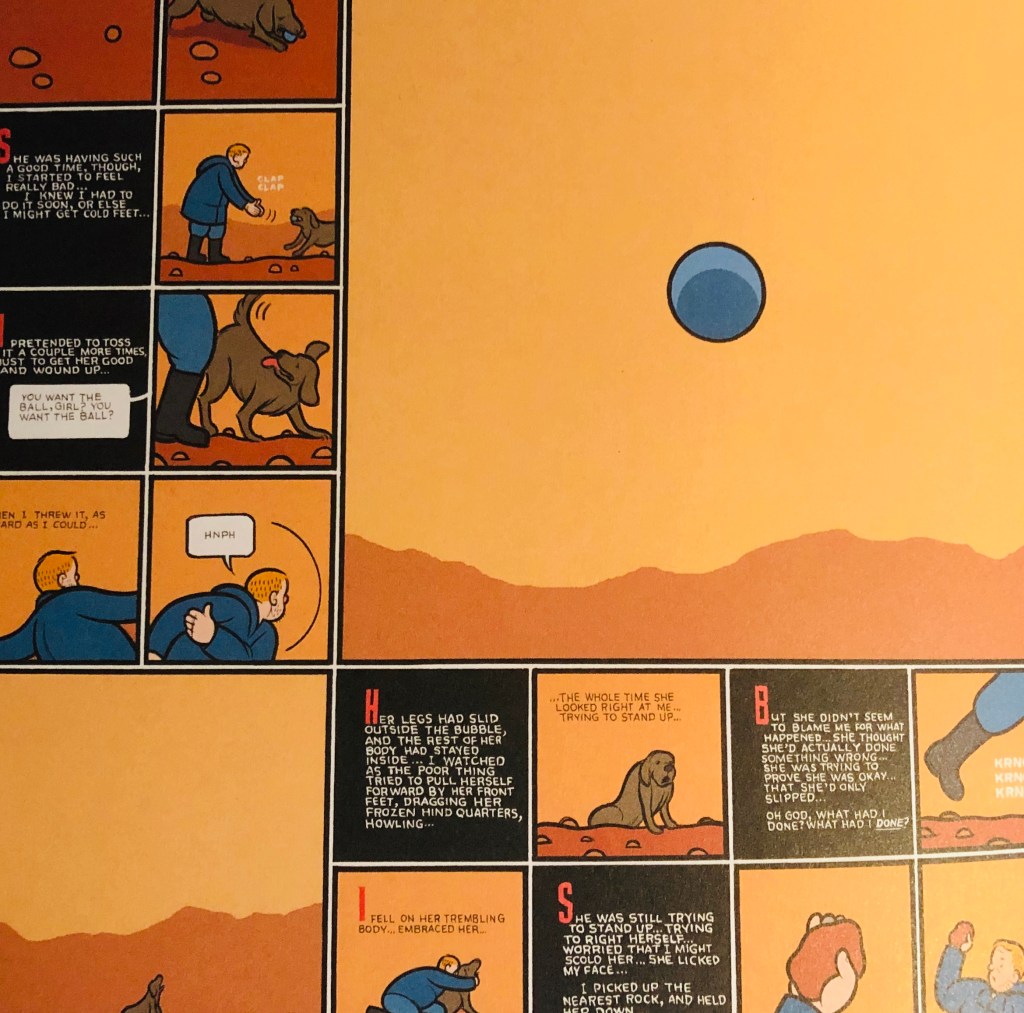
Rusty Brown‘ is a story, it’s a narrative; it has characters and a plot (sort of), a lot of which are communicated through the written word. In this way, ‘Rusty Brown’ is a book. But it’s so visual – the story, plot points and character elements, as well as overall mood, are all communicated visually. In this way, it is like a movie.

And some panels are so stunning that you stop, and stare, and react to them just as pictures. They are moving, desolating, some of them. They almost all involve snow.

I can see why ‘Rusty Brown‘ received such incredible reviews. The pictures are incredible, moving back and forth between schema and detail seamless, laid out so inventively that they are almost mobile. They communicate shock, grief, the grinding passage of time, profound alienation, vast, existential bleakness.

Chris Ware

In fact, most of the emotional content of ‘Rusty Brown‘ is bleak. It is the story of several lives which meet around a middle school in Omaha, Nebraska. This is what I mean when I say it has a plot, sort of: it actually has several plots, or rather, several lives. It’s about an intersection – it doesn’t have a climax. It’s about the rich, complicated human context that lies underneath even the most ordinary moment, in the most ordinary place. It asks you to consider how long the journey has been that has gotten you here, has gotten everyone here, how much everyday time, everyday suffering, has accumulated underneath each and every one of us.

So it doesn’t really have a plot – it has a tone. To quote the New York Times, “Though there are a couple of perverts (and possibly a criminal), his characters aren’t people of wealth, power or energy; they’re self-conscious, often inarticulate, trying to break free of the mundane or anesthetize themselves to it. The characters weave in and out of the 113-page opening sequence, which dissects a single day at a Midwestern school in the 1970s, with its smell of “spilled teacher’s lounge coffee, old milk, formaldehyde and lip gloss and hot lunch.”

Each of the characters is lost, alienated, lonely. The children are awkward, afraid they won’t fit in. The adults are aging, fading, their youthful dreams lost, their bodies unrecognizable. Everyone is miserable. Or, to quote The Guardian, “The remaining narratives display a shared concern with regret and ageing, anxiety and ennui (there’s a lot of repetition and masturbation), the sense of lives being missed for a combination of factors, from parental neglect to racial intolerance. The book poses essential questions about the formation and hardening of character: what limits our chances of happiness or fulfilment? How do behavioural patterns form? And why are they so hard to break?”

It’s kind of a lot: a big book about the grinding alienation of life, hard to read, emotionally bleak. It’s a masterpiece, but, like many masterpieces, it’s impressive rather than fun. I am impressed; I am also really, really glad that the book is over.

It’s a rough thing to think about how hard, how much quiet suffering the people around you are carrying around. Beautiful, bleak pictures make it both easier and harded to connect with material like this, at least for me. Pictures are vivid, yes, but they are less vivid than my imagination, and the pictures relieve me of the need to imagine.

Is the entire genre the same emotional gray of ‘Rusty Brown‘? In my imagination, all graphic novels are beautiful and dismal, and I’m sure that’s not right. I feel contaminated by this novel more than I understand it, laid low and blue. It was really, really good, there’s no way to miss that, but it’s hard, and strange. It’s grand, and sad, and lovely, and cold. It’s pretty magnificent, but in a way that leaves you more lost than when you started.

Ultimately, it’s hard for me to mentally file ‘Rusty Brown‘ as a ‘book’ in my mind. The experience is more like a movie – the parts of it which are the most moving are the visual parts, not the words. It doesn’t elicit book-feelings – it elicits movie-feelings, photograph-feelings.

So, I think I want to read another graphic novel.

Maybe this sounds weird, but I have a sneaking suspicion that I won’t be able to figure out how I feel about this form until I read some more. Different kinds of graphic novels, not just this sad, magnificent one. I’d like to read a funny one, a sweet one, and a violent one. And probably about eight sexy ones.

The Witch Elm

By Tana French

ALL POSTS CONTAIN SPOILERS

Things have been going well at work lately.

I had a particularly good week – good stuff with the team, good experimental results. It was a great week, actually, which is why I was surprised when I found myself having what felt like a minor panic attack yesterday.

It was puzzling – I am not prone to them, and I have nothing to be anxious about (or, at least, nothing to be acutely anxious about this week – the world is burning, but it has been for a while, I’ve acclimated). But even though everything was going well, I walked around all week with an uncomfortable tightness between my lungs, as though a balloon had been inflated inside my chest cavity and was pressing against my heart.

Catharsis was achieved on a red line train home from work. I was reading ‘The Witch Elm‘, and Toby, the main character, was starting to really unravel, his perspective, his sanity, was becoming less and less trustworthy. Meanwhile the danger around him was increasing, and I really needed to him to stay calm, keep a cool head, because he being framed for murder for fuck’s sake, and he just needed to open his eyes and figure it out and fucking handle it, and I noticed that I was freaking out on the train. Not about work, or something my mom said, or whether I had forgotten my anniversary again – I wasn’t freaking about my own life at all. I was freaking out about Toby. ‘The Witch Elm’ was so unsettling that it had anxiety-bombed my entire week.
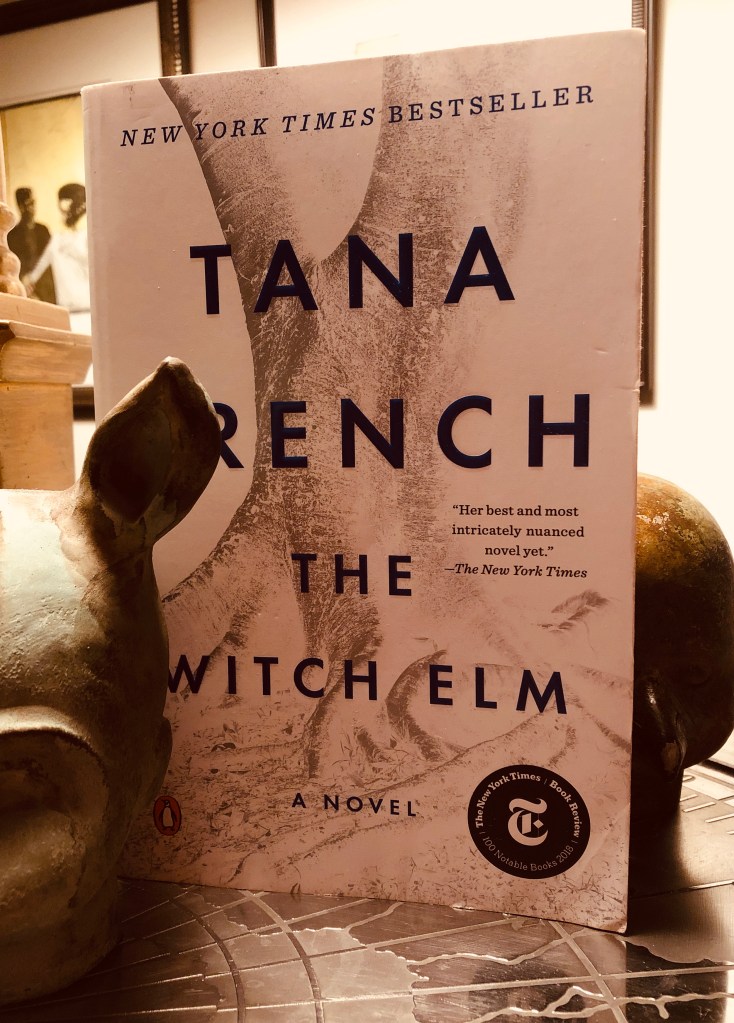
The Witch Elm‘ is Tana French’s latest novel. It is also her first novel which is not a Dublin Murder Squad novel, and so even those of us who love her (which is all of us, right?) viewed it with some slight trepidation. I’ve been very clear about how much I love Tana French. But until ‘The Witch Elm’, it would, technically, have been impossible to say whether it was Tana French I loved, or just the Dublin Murder Squad.

Don’t worry – ‘The Witch Elm‘ is a murder mystery. But it’s an unusual mystery, because it takes as its protagonist not a detective (or a coroner, or a reporter), not a victim, not even a murderer. It takes as its protagonist…a bystander?

There is a reason that most murder mysteries feature detectives – they are the participants in criminal dramas who most closely approximate an omniscient narrator. They are the ones who will eventually know everything, and that’s what we expect in exchange for reading a murder mystery: to eventually know everything, too.

That’s why, despite the fact that every murder mystery detective has crippling demons, they are also brilliant and intuitive and unerring. Despite being tortured, often in the grips of strong PTSD flashbacks, and always, always alcoholic, they approach omniscience. We need to trust them, in order to get what we came for: a solution.

Everyone else involved in a murder mystery is a flawed narrator. The job of a detective is, after all, to assemble complete knowledge. Everyone else has incomplete knowledge, a skewed perspective, their own motives. None of them are trustworthy, and one of them will turn out to be the murderer.

In ‘The Witch Elm‘, French leans into this untrustworthness, hard. Toby Hennessy is, well, a complete tool. He’s a handsome, happy-go-lucky Irishman, a thoughtless optimist who has always gotten his way. He has a good job in PR, good friends, a close family, and a great girlfriend to whom he is thinking about proposing when he surprises some burglars one night robbing his apartment. They beat him nearly to death and leave him with lasting brain damage.

A few weeks after being released from the hospital, Toby learns that his beloved uncle Hugo has been diagnosed with brain cancer, and that his case is terminal. Crippled, fractured, traumatized and spiraling into addiction and depression, Toby moves back to Ivy House.

Ivy House is the Hennessy family home. Purchased by his grandparents, it has been Hugo’s residence since their death. It is a beautiful, secluded old mansion with a long, walled garden. When they were children, Toby and his two cousins, Leon and Susannah, spent their weekends and summers there; it was in this private, lovely estate that they became like siblings.

Toby and his girlfriend move back to Ivy House to care for Hugo in his last days, and to let Toby heal. And so they are there when, one afternoon, Toby’s young nephew finds a skull in the Ivy House garden.

The Witch Elm‘ asks: Are you capable of murder? What if you had recently sustained a serious neurological injury? If your memory was damaged, if you could no longer focus, if you were having sudden, dramatic mood swings? Would you be capable then? And if you might be capable, and there were holes in your memory, would you ever be sure that you hadn’t killed someone?

Really, ‘The Witch Elm‘ is a novel about sanity and home. Specifically, about family homes, about how much the places where we happy as child matter to us, about we much we need them even as they haunt and hold us back. It’s about what we lose when we lose our past, and whether we can ever change unless we leave it.

This is a theme with Tana French: houses, houses that we love, homes (this is basically whatThe Likeness‘ was about). She has a good, visceral understanding of the way in which a beautiful place can became a physical embodiment of love itself, that losing a sense of the sacredness of a beautiful place is heartbreaking, like losing a person.
The Witch Elm‘ is really good. It’s good in all the ways that Tana French is normally good: it’s moody, atmospheric, richly detailed and absorbing. She’s a lovely writer; her prose is miles better than almost any other murder mystery prose (Benjamin Black is the only exception I can think of).

But it’s unsettling in a different way. Toby knows that he is in terrible danger, but he cannot discern whether the danger is from within, or from without. Unable to tell whether his family is trying to frame him, or whether he is, in fact, a murderer, he is excruciatingly vulnerable. This vulnerability will communicate itself to sensitive readers in the form of low-level anxiety and panic attacks on the red line.

For me, this is what sets Tana French apart from other mystery writers. Other authors are strong on plot mechanics, or on atmospherics, or on quiet menace; very few are strong on all of them. Tana French’s novels are so richly detailed that it becomes disturbingly easy to lose yourself in them.

It also makes her difficult to write about. I can’t communicate the anxious dread ‘The Witch Elm‘ made me feel. I felt like I was smothering when I was reading it, like I was in danger. This isn’t merely suspense – this is deep, subconscious identification, and it’s difficult to achieve when you read as much as I do. Tana French is special, and, at this point, I’ll read anything she writes – if she puts out a cookbook, I’ll read that cover to cover.

And, at this rate, it’ll probably scare the shit out of me.

My Sister, the Serial Killer

By Oyinkan Braithwaite

ALL POSTS CONTAIN SPOILERS

“All he wants is a pretty face. That’s all they ever want.” (p. 69)

There’s an idea (which I’m not sure that I totally believe but whatever) that you can only write what you know. And even if I don’t totally believe that that’s 100% true, it certainly makes sense that writers will be able to paint a clearer picture of something which they themselves have seen, describe more accurately something which they themselves have felt.

Which means, I’m afraid, that if you want to read about women’s rage, the deep, seething fury of women against men, you really ought to be reading things that women wrote.

I’m not sure that I would have described myself as wanting to read about women’s rage, but I have found that I resonate with books about it, that I recognize them and am interested in them. I resonated withDietland‘, another novel about the violence of male priorities and disproportionate female response to them. I think everyone resonated withThe Power‘, another revenge novel of female violence (actually, there have been kind a lot of these lately, huh?)

Korede and Ayoola are sisters. Korede is older: responsible, cleanly, fanatical about order and planning. She can cook and maintain a household. She is about to be made head nurse at the Lagos hospital where she works. She walks, virtuous and lonely, through her life, taking care of the sick. And she is in love, from afar, with Tade, the handsome doctor she works with. The only person in whom she feels she can confide is a coma patient in her ward.

Ayoola is beautiful. She has the kind of beauty that causes the men around her to behave like complete idiots. She has no job; rather, she designs clothing that she models on Instagram. She is the favorite of their mother, the favorite of every man in the Lagos area, the favorite. She is bright and funny and charming and brave and the world loves her.

She has also murdered her last three boyfriends.

Each time, Korede has helped her hide the body, wash away the evidence. Each time, she has believed Ayoola when her sister told her that the killing was done in self-defense. And though it has become harder to believe each time, she has continued to keep her sister’s secret.

Until, one day, Ayoola comes to visit Korede at the hospital, and snares Tade, the doctor whom Korede has loved for so long. And Korede, with her heart broken, has to decide whether Tade, whom she knows would never hurt a soul, is safe with her sister, or whether her sister might be a much different animal than she has allowed herself to admit.

I spent most of ‘My Sister, the Serial Killer‘ thinking that the story was pretty fucking obvious. This isn’t to say that I didn’t enjoy it – quite the contrary. The book is written in a wry, spare voice and parceled into short chapters with snappy titles (some of which are so short as to almost qualify as brutal prose-poems), the combined effect of which is suspenseful and almost bizarrely readable. This is the writerly voice that Bret Easton Ellis wishes he had.
But I thought I knew exactly what story I was reading, and I was wrong (this happens to me a lot, and I never, ever learn). I thought that this was a story about a woman facing the fact that her sister is a monster, about watching the evidence pile up and trying not to see it, but eventually confronting it when someone innocent, someone else she loves, is threatened. A pretty basic, totally fun story.

“Ayoola is wearing dungarees – she is the only person I know who can still pull those off – and she is licking ice cream, probably from the parlor around the corner. She pauses the licking, not because she is moved by Peju’s words, but because she is aware that it is proper to pause whatever one is doing when in the presence of someone who is grieving. I spent three hours explaining that particular etiquette to her one Sunday afternoon.” (p. 161)

That’s not what this story is. This is one of those stories where there isn’t only one monster, and the question that Korede will eventually have to answer isn’t whether or not her sister is one. It’s whether, in a monstrous system, there are any heroes. Whether men are capable of loving, really loving, a woman for who she is, and, if they aren’t, then whether they are worthy of being loved at all. And if they aren’t, if you cannot love men, who do you love? Whether, in a world where men will always objectify, use, and abandon you, the only real love that exists is the love between women. Whether the only love that lasts is family.

Ayoola is not the monster of ‘My Sister, the Serial Killer‘, despite the fact that she is a serial killer. The monster is Tade, the kind man who, at the end of the day, can only love a woman for her beauty. Who cannot be turned from beauty even if it means saving his friendships, or his life. Who believes that his love is sincere, premised on deep connection, while it is in fact only a response to how a woman looks in a skimpy dress. Who will forgive anything (literally, anything) in the woman he loves except ugliness.

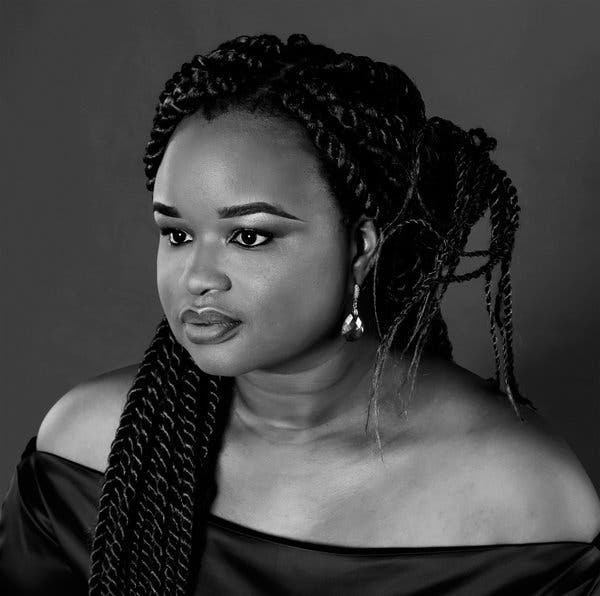
Oyinkan Braithwaite

I love stories like this, stories where the serial killer ends up not being the bad guy. Although, of course, that’s an over-simplification: Ayoola is a very bad guy. But, at the end of the day, she is all that Korede has. And, Braithwaite seems to ask, what did you expect Ayoola to become? Brutalized by her father, every man she has met since has let her get away with anything she wanted, as long as they got to treat her like a beautiful thing. Why should she treat men as though they were people, when they have never, ever, done the same for her? Just because you worship an object doesn’t mean it’s not an object.

It’s a really good question, actually. I spent most of ‘My Sister, the Serial Killer‘ rooting against Ayoola. I think I was supposed to: she’s a gorgeous, gold-digging, man-stealing serial killer. It’s pretty breath-taking that Braithwaite can take you from really hating Ayoola (the way you can only hate a man-stealer) to understanding why we will always choose her. Why we, as women, have to always choose her.

It’s especially impressive because Braithwaite accomplishes this emotional allegiance-shifting without ever declaring anything. There are no manifestos here, no pedantic speeches or feminist rah-rahing. All you as her reader experience is the world through the eyes of one woman, Korede, and you and Korede must realize together why she is angry and at whom. Korede is angry because she isn’t beautiful, you both knew that, but you must realize together that being angry at Ayoola because she is doesn’t make any sense. Because the only reason that it matters, Ayoola’s beauty, is because men are too base, too primitive, too shallow, too evil, to see anything else.

At the end of the day, ‘My Sister, the Serial Killer‘ is about who deserves our care and who doesn’t. And, in a cold, dark world, we cannot afford to extend care to those who do not care for us, who do not honor our essential humanity. And in Braithwaite’s world, men, be they ever so handsome, ever so kind, be they doctors even, do not care for us. They do not honor our essential humanity if we are not beautiful, because they don’t see us. And they don’t see us if we are beautiful, because then our beauty is all they see. And if they cannot care for us, then we should not care for them. We must care then, as sisters, for each other, even if we are beautiful.

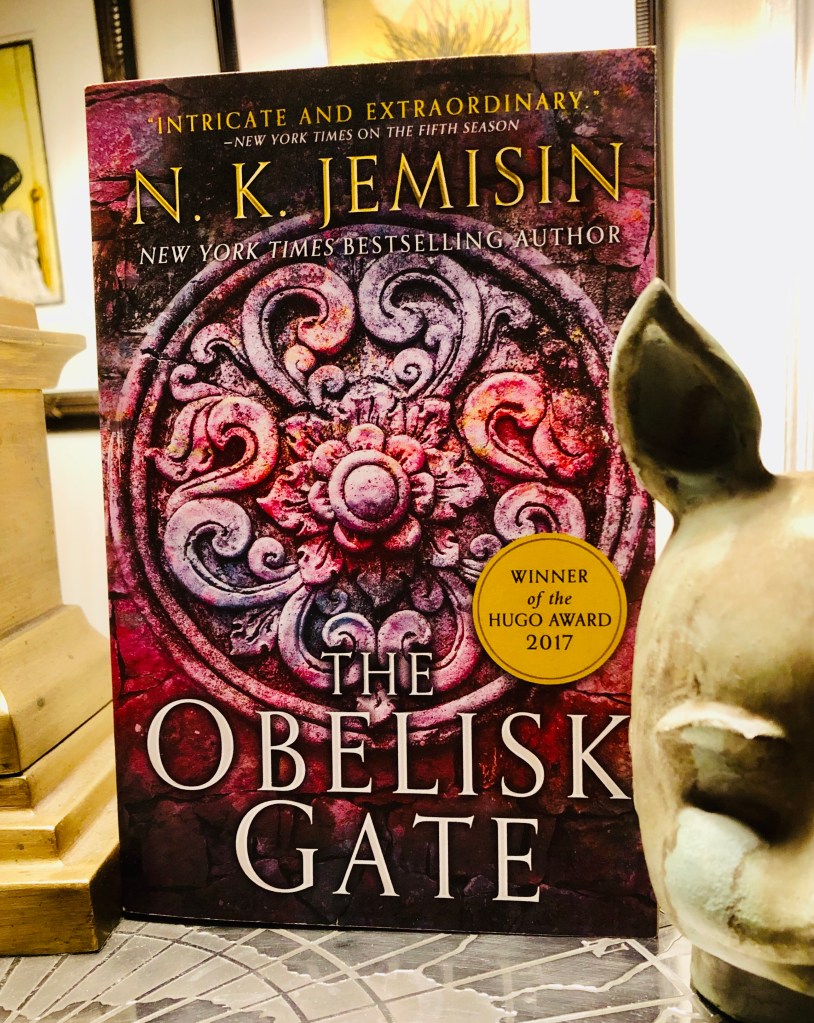
The Obelisk Gate

The Broken Earth: Book Two

By N. K. Jemisin

ALL POSTS CONTAIN SPOILERS

So, now I’ve had some time to think.

Sometimes, when you’re flying through a book, you don’t stop to think about why you’re loving it so much. This is especially true with plotty books – you don’t need to think about why it’s working, you can just lie back and enjoy the ride.

But it’s a worthwhile exercise, once you pause for breath. And I had a busy week at work, and so was forced to spend time NOT reading ‘The Broken Earth Trilogy‘ trilogy, and so I thought about it.

I want to be clear: this pause was not voluntary. I need to work to eat; otherwise, I would have chewed all the way through the series without washing or sleeping. But, like I said, it was a busy week, so I only just now finished ‘The Obelisk Gate‘, the second book in ‘The Broken Earth Trilogy‘ series.

And I know that ‘The Obelisk Gate‘ is technically a separate book, but the entire series really reads like one book, one story, and I am only taking the time to stop and write about this installment for the sake of personal discipline. So, for coherence, I will probably refer to the trilogy as a single work, which it clearly is.

And I’ve been thinking a lot about why the trilogy is so good. And…

I don’t know.

The Broken Earth Trilogy‘ trilogy is about a world that is ending. And I suspect that, like all stories that are about the world ending, it is really about the evil which people do, which comes out of us naturally, inevitably, like breath. About the primitive, tribal cruelties that we perpetrate, in all times, all places, when we are frightened.

There’s a question I wonder sometimes: do you have to understand a novel to love it?

There are two ways to say what a novel is about. Let’s take an easy one: what is ‘The Scarlet Letter’ about? Well, technically, it’s about a woman being punished for adultery through sartorial intervention.

But, obviously, that’s not what it’s really about about. ‘The Scarlet Letter’ is about sin, and guilt, and hypocrisy. It’s about how God is all-knowing and all-loving and we are not, and so when man’s law tries to approximate God’s law, the discrepancy will necessarily result in injustice. It’s about humility.

See what I mean? There’s about, and then there’s about about.

I know what ‘The Broken Earth Trilogy‘ trilogy is about. Jemisin is a clear, effective writer, much more than most science fiction or fantasy writers. Even when she is describing things which are actually beyond description, she is never hard to follow or understand. She’s really good.

But I am not at all sure that I know what this trilogy is about about.

On the most superficial level, ‘The Broken Earth Trilogy‘ trilogy is an allegory about racism and xenophobia and otherness. It’s about human cruelty, and about whether we are capable of preserving our humanity, our ability to be kind to the other, when we are desperate, or in danger, or facing extinction. And the fact that this allegory is obvious a) doesn’t mean that it isn’t a valuable metaphor (it isn’t as though we’ve solved this problem, so, by all means, let’s keep working it through in prose) and b) doesn’t mean that it’s all that’s going on in these novels.

I also suspect that it is about about climate change. Bear with me: the premise of ‘The Broken Earth Trilogy‘ trilogy, tectonically-speaking, is that humans, at the acme of their civilization, committed an act which so permanently destabilized the earth’s crust that it threatens the survival of everything on it. This is understood by all living human inhabitants of the earth as its revenge, that the earth is essentially, permanently, hostile to human life. That seems pretty clear to me.

But the problem with explicating allegory is that it makes the work seem preachy, or academic, or pedantic, and that is emphatically not the case here. In fact, the lack of pedantry is partly why I’m having trouble discerning the allegory.

So, am I allowed to love a story without understanding the allegory?

Obviously, the answer is yes – I can enjoy it any way I want. I can even enjoy it while totally misunderstanding the allegory. But (and honestly, this may be wrong) I think that understanding the allegory makes the experience of the books richer. And I know that this makes me sound like a complete nerd, but I am a complete nerd, and I really do enjoy a book more when I understand not only the story, but also the other stories which the story is referencing, the moral questions it is obliquely pondering, the historical events which it is recapitulating. They make me appreciate the story more, the skill of its writing, the depth of its thought.

And when you know, or suspect, that a story has these extra layers, and you aren’t quite getting them, it’s disorienting, like when you fall asleep in the middle of a movie and miss a whole bunch of plot. You might technically understand the ending, but can you say that you really understood the movie?

Not really, and so I don’t feel like I can say that I understand ‘The Obelisk Gate‘, and it’s making me feel very insecure, because I really, really like it. I want to understand it, and so I’ve been thinking about it.

N. K. Jemisin

One of the most salient threads which runs through the first two novels of ‘The Broken Earth Trilogy‘ is that our fundamental selves are revealed through our treatment of our children. This is true on the level of the society as well as on the level of the individual. Children are a major, major part of ‘The Broken Earth’ books – love for them, grief for the loss of them, rage at the people who hurt them.

And cruelty to children winds through the books. There is an idea which pervades the entire trilogy (so far) that, in health, children are loved and cherished, protected and cared for. It is only in sickness that we allow them to be tortured or mutilated, abandoned or killed.

Earth has become a sick place, and the question which Jemisin is asking is, is it possible to be a healthy person in a sick place? Can you bring children into a sick world, raise them in a sick society, love them healthily when you cannot truly keep them safe? When the society in which they will grow up might abuse or murder them, use them or break them? When the very earth on which they walk might drive them and every one they love to extinction at any moment?

What does parental love even mean in that context? Parents love their children, ideally. Parents will do anything, risk anything, for their health and happiness – what does that mean in a world where health and happiness are impossible? What happens to love in a world like that?

It curdles, turns inward into rage, becomes destructive, deadens. Twists and becomes murderous in its turn. Even love becomes impossible, in a sick world.

Now that I think about it, this is kind of what ‘1984’ is also about. Actually, this is exactly what ‘1984’ is about: the idea that in a totalitarian society, even love, even private, romantic love, is impossible, because there is no private space for a human heart to have something normal and good, like love.

And, in ‘The Broken Earth Trilogy‘ trilogy, that’s true of parents, too: on a hostile earth, where we are threatened at every turn, where constant fear and danger have made us base and mean and vicious, we can’t even love our children. Because loving children is hopeful, and hope requires a future, and in a world with no future there’s no way to love them – it’s too painful.

I know that I’m not making ‘The Obelisk Gate‘ sound fun – I’m probably making it sound like the world’s bleakest book about parenting. It is fun, in a bleak, scary way. It’s one of the most absorbing books I’ve read in years, and, as I mentioned last time, I honestly just resent the time I have to spend here, writing about it, instead of thinking about it. It’s so, so good.

The Monster of Elendhaven

By Jennifer Giesbrecht

ALL POSTS CONTAIN SPOILERS

“Florian dipped gingerly, right at the sodden border cut by the tide, and plucked out a stone: perfectly round, an inch in diameter and opalescent in sheen. He held it aloft for Johann’s benefit. “The oldest stories of the North called these rocks Hallandrette’s Roe. She lays her clutch along the beach, and protects them from the destructive hands of mortal beings.” Florian turned on his heel and pitched the stone at the cliff-wall as hard as he could. It bounced off the slate harmlessly. “See? Hard stone. Unbreakable.”

Johann frowned. “How do you crack one open, then?”

Florian smiled, secretive. “A privilege reserved for Hallandrette’s chosen. When a wretched child, one wronged or wounded deep in the soul, throws what they love most in the ocean they may cast a roe against the stone and a hallankind will be born. Keep the stone in their pocket and the Queen sends to them one of her children.:

“A friend for the lonely soul.”

“A companion,” Florian affirmed, “made from the same dark matter that coats the bottom of the Nord Sea. A hallankind will love that wretched child as a brother or sister. They will drag whoever wronged their brother-sister-friend into the sea and wring them through the spines of their mother’s baleen until they are foam and sea particle, forgotten in the cradle of her belly.” (p. 52).

Maybe all stories are love stories.

OK, not ALL of them – it’s difficult to describe, oh, ‘Heart of Darkness’ as a love story – but it’s surprisingly hard to come up with a story that isn’t, in some way, a love story.

The trick of it is to understand that love stories sometimes come hidden in unlikely disguises. All sorts of people have love stories who don’t look like they deserve them. Broken people, evil people, sad people, rude people, angry people, all sorts of morally unphotogenic people who nevertheless occasionally find themselves looking for love, feeling love, or acting out of love.

In some ways, those are our favorite love stories. Maybe it’s because they are more suspenseful, since we aren’t sure that the characters in them will find love. Maybe it’s because they are more ambiguous, since we don’t know whether we really want them to find love. Or maybe it’s because they feel truer, since very few of us feel 100% certain that we deserve love.

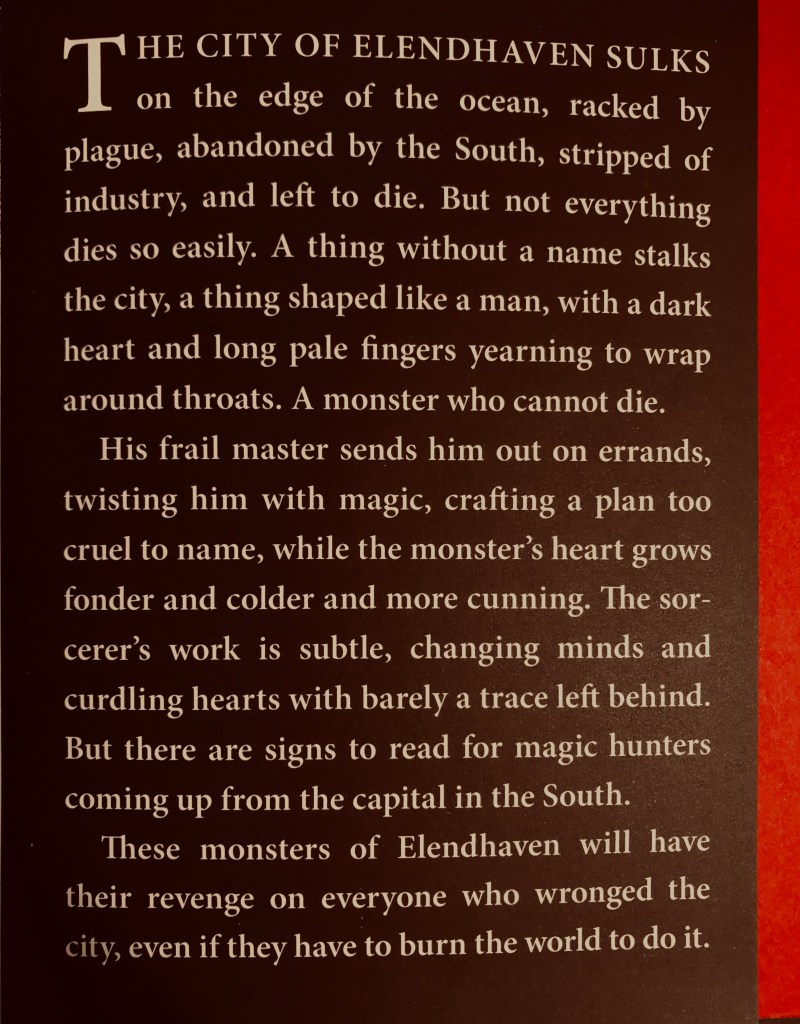
The inside jacket cover of ‘The Monster of Elendhaven’

When I saw ‘The Monster of Elendhaven‘ in a bookstore the other day, I didn’t think it was a love story. It doesn’t look like a love story. I’m not sure why I bought it – I’m not in the habit of purchasing books of unknown provenance. But the cover was creepy and the description was even creepier, and I was on a mini-vacation, so I bought it.

Elendhaven is failing industrial city on the northern edge of the map. A hideous accident generations ago has left the ocean poisoned and black. The ancient noble families of Elendhaven have fallen into poverty and the magic that was the source of their power has been outlawed.

Johann does not know who he is or where he came from. All he knows is that he used to be nameless, unloved, born of darkness, until he decided to call himself Johann. He tends to slide off people’s attention, unremarked and unremembered by anyone who meets him. And he can’t be killed, at least not permanently.

And he knows that he likes to kill people. Johann is an accomplished killer – a monster, in fact – who stalks the streets of Elendhaven taking whatever he wants and killing whomever had it.

One night, Johann chooses to rob Florian Leickenbloom, the last living member of the once-magnificant Leickenbloom family. Florian is a small, beautiful man who also happens to be, as Johann soon learns, a sorcerer. Orphaned as a child when the rest of his family was killed in a plague, Florian lives in hermitish seclusion, planning his revenge. And instead of killing him, Johann will fall in love with Florian, and help him realize his terrible plan.

I don’t know if it’s more or less beautiful when a monster loves another monster. But something I respect about Giesbrecht: her monsters are really monsters. They are ugly and evil; they hurt people and they enjoy it. They even hurt each other, and because they have lived lives characterized by pain, cruelty, and rejection, this is part of their love.

The Monster of Elendhaven‘ is gory, viscerally and explicitly gory. It’s creepy, and sexy, and kind of funny, and sad. It’s also romantic, I think?

Romance is not my strong suit, so I might be wrong. It’s also not my favorite genre – I actually have to leave the room during proposal scenes in movies, because they make me so uncomfortable. But, as far as I understand it, romances are stories in which two elements complement each other in a way which makes each feel as though things about them which had been wrong or missing are, in fact, purposeful and right.

This is why this they are powerful for us. We’re all missing pieces, or rough along an edge or two, crumpled where we should be smooth, and romances provide a reason for those traits: those are things which make us ourselves, so if someone loves us, then the self that we are is the right self, and therefore those things are right, too. Love justifies our pain, and our mistakes – it is the forgiveness from the world we need to forgive ourselves.

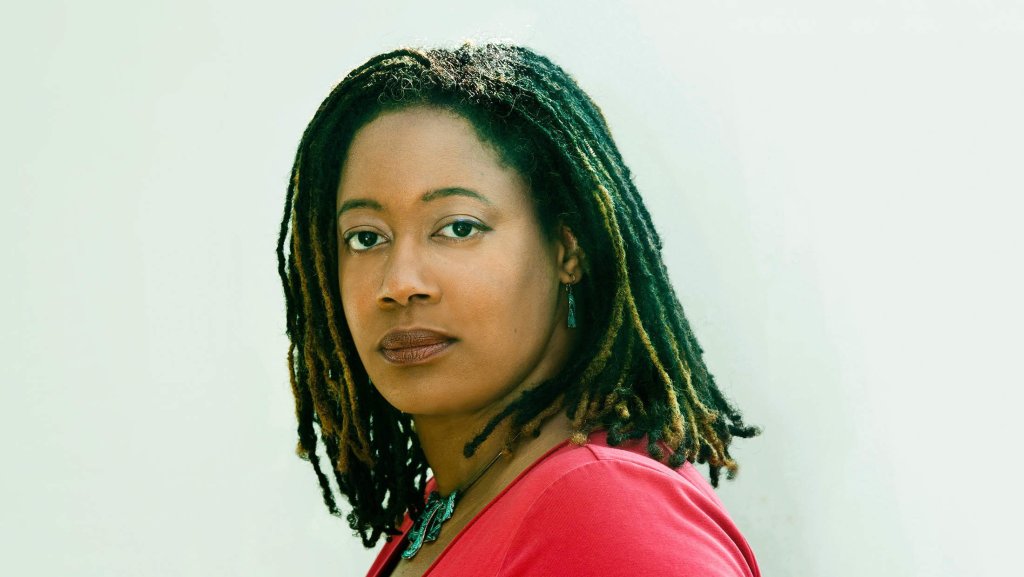
Jennifer Giesbrecht

And that’s why the romances of monsters are the most revealing romances of all: they are the far-out test case, the most extreme example. They are interesting, yes, monsters are always interesting, but it’s more than that: they are the limit on the possible. And you know you fit comfortably within their limit, and so you know that your experience, your romance, your love, will fit comfortably within theirs.

I wonder if I am the only person who read ‘The Monster of Elendhaven‘ and thought about love the whole time. I’m definitely not the only person who noticed it was a romance, but I might be the only person who thought it was a lovely romance (rather than a horrific one). That there is something beautiful about the idea of an abandoned little boy raging at the world, calling a monster forth from the ocean who will love and avenge him and who cannot die the way his family did. Who can therefore never leave him alone. In the idea that, if we are monsters, the world might provide another monster to love us, to make us whole.

Because maybe only a monster can truly love another monster.

It’s like there’s a whole other world, full of weird, creepy people (which I definitely am), and we get a whole different, creepy literature. But just because we’re weird and dark doesn’t mean that we don’t have feelings – it just means that our feelings are creepier and weirder than other peoples. And ‘The Monster of Elendhaven‘ is a romance for us.

Maybe that’s a weird reaction. But such a weird little book deserves a weird little reaction. ‘The Monster of Elendhaven‘ is a book about revenge and hate and gruesome death, and I thought that it was super romantic, but not in the way I hate – in a way I kind of loved. It’s the most romantic murder book I’ve read.

At least this year.

The Luminaries

By Eleanor Catton

ALL POSTS CONTAIN SPOILERS

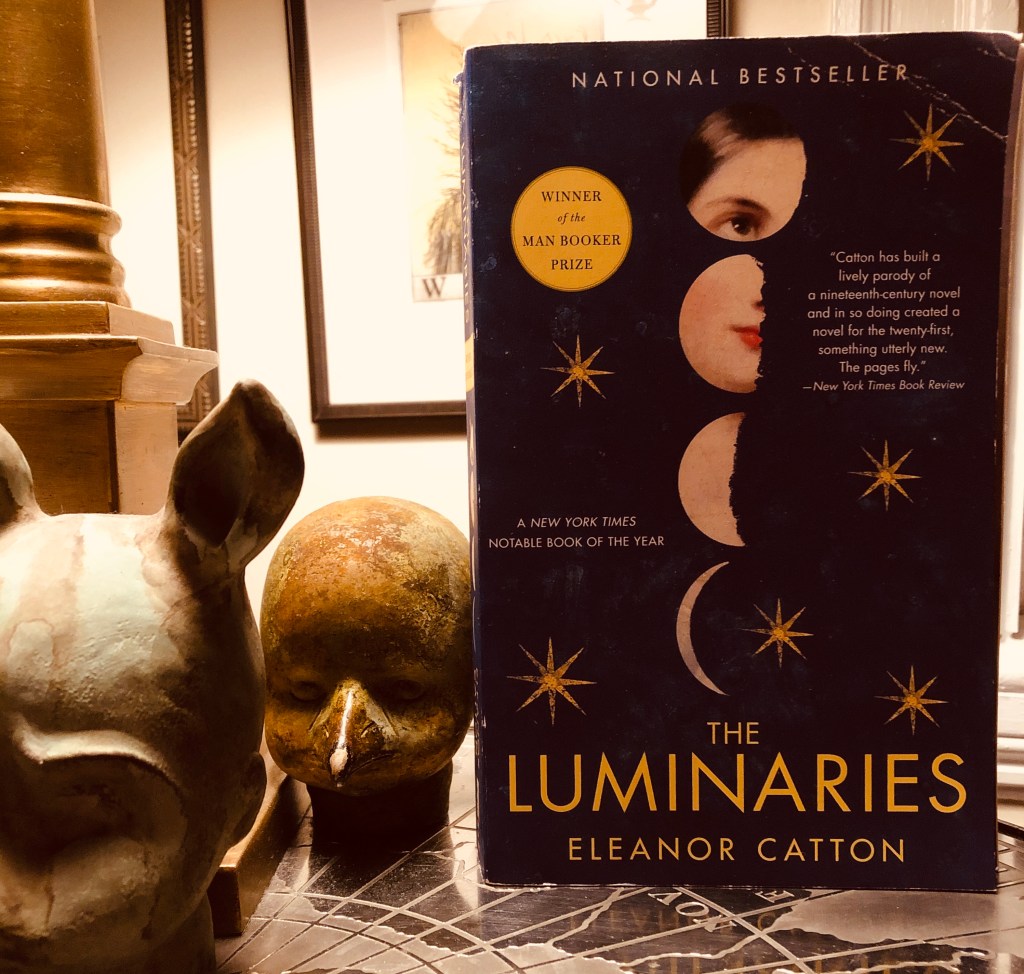
I was in the Harvard Bookstore a little while ago (which, like, I know I mention it a lot, but I spend a totally normal amount of time in bookstores, not a weird, excessive amount of time, at all…), sort of wandering around the Fiction and Literature section, and I noticed a very pretty book with a bright blue cover and yellow letters.

It was called ‘The Luminaries‘, and I had never seen it before, and it was a big book, a hundreds of pages, and the weirdest part: it had won the Man Booker prize. It won the Man Booker in 2013, when I was hypothetically paying attention.

To be clear: prizes aren’t that big a deal. Prizes are merely the opinions of people, and so, like other opinions of people, they are a mixed bag. Some are better, some are worse. As prizes go, I like the Man Booker, especially since they expanded eligibility to include all English-language novels. A prize is never a sufficient reason to read a book, but I think the Man Booker people reliably choose good and interesting books – I’m almost never left scratching my head over a Man Booker winner (which is NOT something can be said of the Pulitzer).

A prize is never a sufficient reason to read a book, but a Man Booker AND a really pretty cover? Why not?

So I bought ‘The Luminaries‘.

The Luminaries‘ is a murder mystery set in a gold rush town in the 19th century. En route to strike it rich in New Zealand’s gold rush, Walter Moody sees what he can only conclude is a ghost in a the hold of his ship the night before he makes land. Having a drink to calm his nerves in the smoking room of his hotel, he finds himself in the middle of secret meeting of local prospectors who have gotten together to puzzle over several strange, recent events.

Another local prospector, Crosbie Wells, a hermit working a useless claim, is found dead in his cabin, apparently of natural causes. However, when his cabin is examined, a fortune in pressed gold is found there. The richest man in town, Emery Staines, is missing. A prostitute, Anna Wetherell, has just tried to end her own life. And a gubernatorial candidate, Alistair Lauderback, seems to be in a dispute with the man who owns the very ship that Moody sailed in on. And the men in the smoking room of Moody’s hotel believe that all these events are connected.

If that sounds ornate and gothic, it is. Eleanor Catton has written a Victorian gothic novel, and then twisted it into something modern. She is clearly a student of the form – she clearly loves it – but her perspective is contemporary, and female.

She’s also a phenomenal writer. She’s got the gift of all great storytellers, the power of telling stories that make you completely forget that you’ve been sitting in your comfy chair in your jammies for two hours without moving and you can’t remember the last time you felt your legs and you have to pee. She has a particular gift for characterization: her character descriptions rise to the level of genius. They are complex and lovely and true-feeling, characters who seem somehow familiar while at the same time seeming unlike anyone you’ve ever met, someone utterly new and yet resonant.

“Walter Moody was not superstitious, though he derived great enjoyment from the superstitions of others, and he was not easily deceived by impression, though he took great care in designing his own. This owed less to his intelligence, however, than to his experience – which, prior to his departure for New Zealand, could be termed neither broad nor varied in its character. In his life so far he had known only the kind of doubt that is calculated and secure. He had known only suspicion, cynicism, probability – never the fearful unraveling that comes with one ceasing to trust in one’s own trusting power; never the dread panic that follows this unraveling; never the dull void that follows last of all.” (p. 18)

Eleanor Catton

“Shepard’s autobiography (a document which, if ever penned, would be rigid, admonishing, and frugal) did not possess that necessary chapter wherein the young hero sows his oats and strays; since his marriage, his imagination had conjured nothing beyond the squarish figure of Mrs. [Shepard], whose measures were so familiar, and so regular, that he might have set his pocket watch by the rhythm of her days. He had always been irreproachable in his conduct, and as a consequence, his capacity for empathy was small.” (p. 135)

“Quee Long was a barrel-chested man of capable proportions and a practical strength…The gaps in his smile tended to put one in mind of a child whose milk teeth were falling away – a comparison that Quee Long might well have made himself, for he had a critical eye, a quick wit, and a flair for caustic deprecation, most especially when that deprecation was self-imposed. He painted a very feeble picture whenever he spoke about himself, a practice that was humorously meant, but that belied, nevertheless, an excessively vulnerable self-conception. For Quee Long measured all his actions by a private standard of perfection, and labored in service of this standard: as a consequence he was never really satisfied with any of his efforts, or with their results, and tended, in general, toward defeatism.” (p. 258)

Maybe you didn’t think that the world needed an 800-odd page modern satire of a Victorian gothic murder mystery set in New Zealand and peopled with breathtakingly well-written characters – you were wrong. And here’s why:

Those old stories had one great virtue: they were entertaining. They were fantastically entertaining, which is perhaps the greatest virtue a story can have. But Eleanor Catton understands something about them: that underneath the entertainment they provided, those old stories missed so much about what was important about the world which was their setting.

They missed the lives of all the invisible people: all the poor people, the immigrants, the slaves, the ill, the whores, the women and children. All those people who just provide texture, color, to those old stories, who are just scenery. And that, even though those people never starred in those stories which we love, they were real, they had lives and feelings and hopes and griefs. And that, in any real world, they would also have stories.

And so she has written them in, not in an obnoxious, heavy-handed. PC sort of way, but the way the ought to be written: as a true and proper part of the world. And then, in the end, she reveals the whole point: that under the labyrinthine twistings of the plot, under the mechanisms and mysteries and villains and ghosts and buried treasures (and all those things are there, in this story), those humans, their human stories, were the point all along.

The Luminaries‘ is a love story which you don’t know is a love story until the very end. It’s a novel that reminds you that murders and thefts and betrayals and winfalls are all events that might happen in a life, but that the life is all that really matters. It’s engrossing through out, gorgeously written, sharp and funny, but, in the end, it’s beautiful, and I loved it.

Normal People

By Sally Rooney

ALL POSTS CONTAIN SPOILERS

“If people found out what he has been doing with Marianne, in secret, while ignoring her every day in school, his life would be over. He would walk down the hallway and people’s eyes would follow him, like he was serial killer, or worse. His friends don’t think of him as a deviant person, a person who could say to Marianne Sheridan, in broad daylight, completely sober: It is ok if I come in your mouth?” (p. 28)

There’s a well-worn bit of folk wisdom, that the body knows what it needs. That if you’re iron-deficient, you’ll develop a sudden, strong hankering for, like, kale. Or if a cold is about to come on and you need the immune boost that vitamin C provides, you’ll suddenly crave oranges. That your body can sense its own mineral needs, and translate these needs into food desires below the level of your consciousness.

Ok, sure. Why not? The body is smart.

I wonder, though, whether there is a similar process to address emotional deficiencies. Whether, when we are hurting, or in deep need of solace or wisdom of a particular kind, our psyches know to reach out and get it, even before we have understood the trouble we are in.

I noticed recently that I have been reading novels. I have been reading basically nothing except novels. This is unusual for me: normally, my non-fiction to fiction ratio is about 1:1.

Weirder still, the novels I am reading are changing. My bookshelves reveal a historical preference: I am, as we have discussed many times, a bit of a traditionalist, and so my shelves are dominated by dead, old, white men (which is coincident with, rather than representative of, my literary values: I don’t think white men are intrinsically better than anyone else – I think they gave themselves an unfair lead). If I were asked to list my favorite authors, not a single living author would crack the top…ten*?

*(Although, in the spirit of answering the query honestly: one of the authors I love the most in world, David Foster Wallace, ought to be alive)

And yet, lately, I have been reading almost exclusively contemporary fiction. Weirdest still, I have been reading almost exclusively fiction written by women.

This is enormously out of character for me, but sometimes the heart knows what it needs better than the head. And I have learned that, when the body craves something, it is probably best to consume it. So I’ve been leaning into my emotional needs and reading whatever strikes my fancy, no matter how contemporary, unvetted, or estrogenic it may be.

A few weeks ago I read Sally Rooney’s debut novel, ‘Conversations with Friends‘. I liked it – I thought it was a strong piece of work, but I didn’t feel nourished by it, particularly. I appreciated it, as an intellectual accomplishment, but I didn’t think that I connected with it, emotionally, at the time.
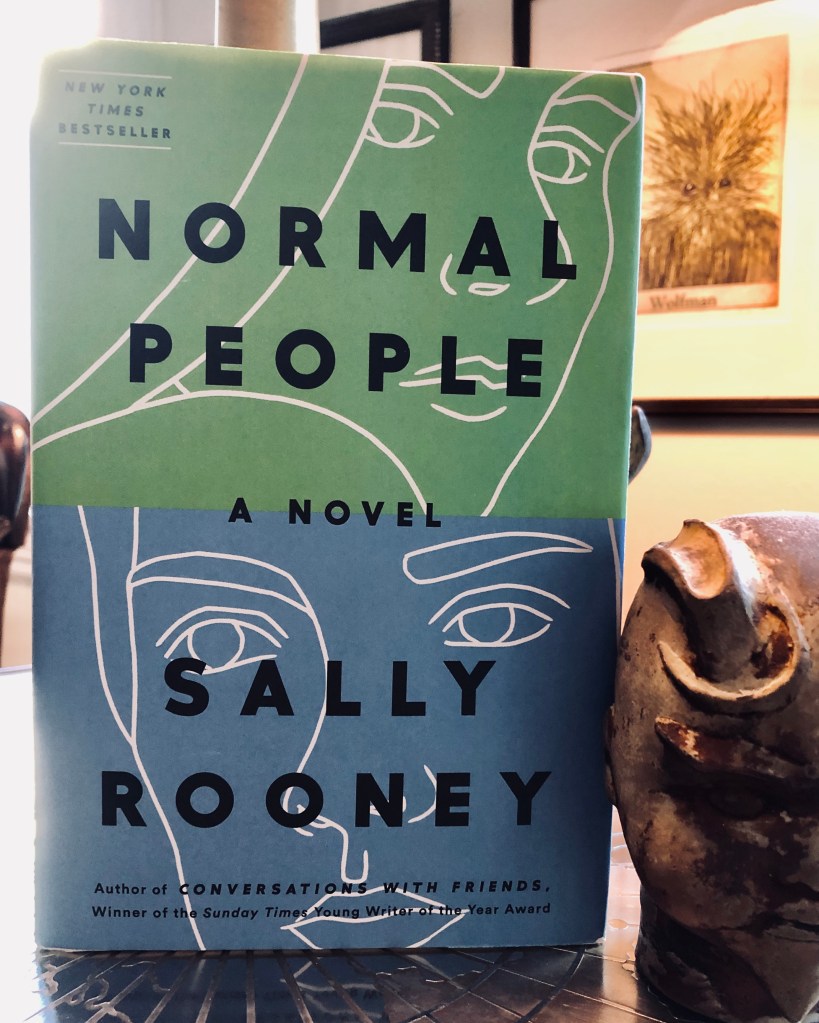
But I have felt the need to read her second novel, ‘Normal People‘, fairly urgently ever since. Like ‘Conversations with Friends‘, ‘Normal People’ made all the important literary people pee their pants, which of course made me not want to read it, but there was something that kept nagging at me. And so, this week, like someone with an iron-deficiency and a kale salad, I sat down and read ‘Normal People’ in one sitting.

Normal People‘ is the story of Connell and Marianne. Connell and Marianne know each other from school – Marianne is rich and unpopular; intensely smart and traumatized by a deeply fucked up family, she moves through the world almost totally alone. Connell is the son of her family’s housekeeper. He is popular and handsome; also smart, he is kind and everyone likes him.

In the afternoons when Connell comes to pick up his mother from Marianne’s house, he and Marianne will form a relationship that is both intense and secret. Her profound unpopularity makes Connell ashamed of her, an unkindness he will not really understand until they go off to Trinity together. There, as Marianne becomes popular and sought-after, and Connell is handicapped for the first time by his shyness and working-class background, both of them will try to discover if they love each other and whether they can be happy.

Conversations with Friends‘ is, at the end of the day, a story about friendship. It is a love story, but it’s about how love hides in friendship. ‘Normal People‘ is a love story, a story about great and transformative love. But it is written in the same spare-and-yet-unsparing style as ‘Conversations with Friends’, which makes it feel disorienting and scary and painful, sort of like being in love.

I’ve come to the conclusion that I find Rooney’s writing extremely effective. I thought at first that her severe lack of style was a little over-stylized (if that makes sense), but I’m completely on board now. The lack of authorial voice forces you into the perspective of the character, right up against them. It’s forgiving and present. Which is a particular accomplishment because ‘Normal People‘ alternately takes the perspective of both of its main characters.

I think it really comes down to why people read novels in the first place.

There are many valid reasons to read novels. People read them to be entertained, or because they are assigned them in school, or to make themselves seem smart.

But why do people read novels like this, as adults, when no one is watching? I think, and maybe I am only speaking for myself, that people read novels to learn about how other people feel, to understand their own feelings, to learn whether their own feelings are normal, to make sense of the world around them, to try to see the world through other people’s eyes and to see whether they are, in fact, part of a common humanity. They read them to see the great range of human emotional possibility, and to fit themselves within that range. They are maps for our hearts.

Sally Rooney

Which doesn’t mean that goodness doesn’t matter. I’m not sure that writerly skill necessarily makes a novel more emotionally effective – in fact, it’s often inversely correlated (Joyce, Pynchon, Faulkner, Dickens, so many of the great writers leave people cold) – but when a well-written novel is emotionally effective, the two qualities become greater than the sum of their parts.

That’s what happened with ‘Normal People‘. The brutal bluntness of the prose, the unflinching eye Rooney uses to examine her characters, the keen ear she has for the subtleties of complex and contradictory human emotions, all combine to make her novels an immersive and moving experience.

I think I understand why I needed to read ‘Normal People‘ right now. ‘Normal People’ is about whether or not broken people can be loved, and that is a question I’ve spent a lot of my life asking. And it is the question I’ve spent most of the last year obsessing over.

I think that ‘Normal People‘ is a probably a great novel, but I’m not really in a position to judge because the only thing that I can think about is how it was exactly what I needed. I’m used to thinking about whether or not books are good; I am used to connecting with them intellectually. I don’t usually just let novels happen to me.

And, of course, ‘Normal People‘ didn’t answer any questions, and didn’t solve any problems. I don’t think that was the point. And I didn’t feel better per se, but I did feel more connected. More normal.

The Incendiaries

By R. O. Kwon

ALL POSTS CONTAIN SPOILERS

Have you ever eaten french fries for dinner?

Do you know that feeling you get, after? When you’re technically full, but you haven’t eaten anything of substance, so your blood feels both thick and empty? Like, your stomach knows that it’s extended, but not satisfied? And you feel heavy, but not strong? Not healthy? And you can feel the grease working its way out through your pores and somehow you know that you haven’t eaten one single nutrient? And even though you know you’ll be fine, it also sort of feels as though you’re having a medical emergency?

And you’re not sure why the situation feels so dire, because potatoes aren’t that bad for you, right? It’s not like you ate gummy bears for dinner (I’ve done this, too, several times, and if you haven’t, trust me: it feels different, even worse, than fries). Potatoes have some value as food, right? And maybe you had ketchup, and that’s technically a fruit but also kind of a vegetable? And so maybe you kind of had a salad? So why do you feel…like you didn’t eat a salad?

Also, french fries are delicious! You loved every bite; you experienced, in those first fries in particular, a sense of happiness which approached pure joy – that’s why you ate so many fries that you can’t eat anything else now. So many that you sort of don’t want to eat anything ever again.

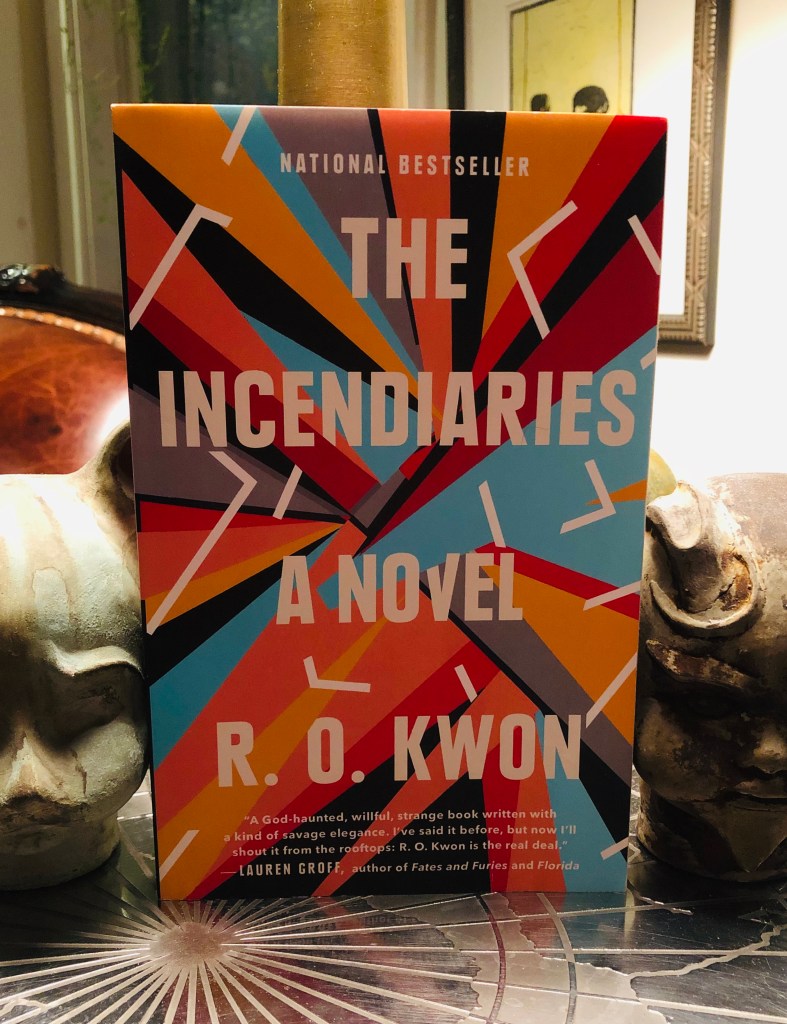
That’s how I feel about ‘The Incendiaries‘. I feel like I just flew through a book, devoured it, and it felt, at the time, as though there must have been substance in there somewhere, but that substance is eluding me now that the book is over. Now, I just feel weirdly mentally bloated.

Will and Phoebe meet their first year at a prestigious New York university. They each come weighted down with significant baggage. Will is a former born-again Christian who has had a crisis of faith. From a less prosperous background than most of his classmates, Will hides the fact that he must work several jobs in order support himself.

Phoebe is a former piano prodigy. She has spent her entire childhood in brutal pursuit of excellence. When she realizes one day that while technical perfection may be within her grasp, she will always lack intrinsic artistic greatness, she retires from piano. She delivers this information to her single mother during a drive; in the ensuing emotional scene, she crashes the car and her mother is killed.

Will and Phoebe fall in love and begin a relationship. Phoebe becomes Will’s whole world, the focus of an all-consuming love. During their first year, however, Phoebe meets a man named John Leal.

A figure of some mysteriousness, Leal is, like Phoebe herself, of Korean ancestry. According to local legend, he has spent time in a North Korean prison camp. Once freed, he returned to North America and has since taken to wandering upstate New York barefoot, recruiting local college students to his prayer group, which he calls Jejah.

As Phoebe becomes more involved in Jejah, Will becomes concerned that it is a cult. When Will sets himself against Jejah, he will risk losing Phoebe, and these three troubled people will become melodramatically tangled in a web of love and guilt and anger.

I know what ‘The Incendiaries‘ wants to be about. ‘The Incendiaries’ believes that it is a nutritious novel. It doesn’t think it’s french fries – ‘The Incendiaries’ definitely thinks it has some vegetables in it. It thinks it’s about, well, love and grief and guilt and anger. It thinks it’s about how, in a weird way, those are all the same thing. Not exactly the same, obviously: there are meaningful differences between love and grief and guilt and anger. But they are the great forces which shape or, in adverse circumstances, warp us. They braid together and bleed into each other. And they are so, so powerful that when they combine, they can drive us into states so extreme we would not even recognize ourselves.

That all sounds pretty deep, doesn’t? Those are heavy themes; these plot elements (cults, terrorism, rape), these are varsity-level plot elements. They should add up to something substantial, but they weirdly don’t.

R. O. Kwon

Or, at least, they don’t for me.

One of the differences between good novels and Great Novels is that great novels transcend their plot. Like all novels, they are about some people doing some things, sure, but, in Great Novels, those people and those things have meanings which relate to the greater concerns of humanity. Great Novels, through their plot, teach us something about ourselves. Goods novel might be beautifully written, enthralling, moving, but they are only about the exact people and things that they are about. They are limited by their plots, for better or worse.

The Incendiaries‘ is not a Great Novel. Sure, it’s an absorbing story – I did mention that I chewed through it, right? It’s not boring, at all. The characters are interesting (well, Will is. Phoebe isn’t, and John Leal is barely a character). But Will is an interesting character! Maybe not a deep one, not an illuminating one, but interesting, fun to read.

But I don’t think this novel goes any deeper (allowing, always, for the possibility that it went way deeper and I missed it). And that would be fine – the world needs great stories that don’t go any deeper – but I have the distinct impression that ‘The Incendiaries‘ thinks it’s pretty deep.

It’s this discrepancy that I find hard to cope with. I don’t like it when a novel’s ambitions show, and I find it extra-cringy when they show all those ambitions and then don’t realize them. It makes me uncomfortable.

This is probably my hang-up. You know how some people can’t watch ‘The Office’ because the humor makes them so uncomfortable? And the rest of us think those people are complete wussies who are missing out? This is probably my version of that. When I read novels that are aiming way higher than they land, my teeth hurt.

And it’s a shame, because good novels are good, and if this isn’t a good novel, it’s definitely a fun one. It’s about stuff I enjoy reading about, like terrorism and cults and relationship drama. It’s right in my sweet spot.

But I think that we should be judging books the way they want to be judged. Put differently: we should be taking books at their word. If a book claims to be a Great Novel, if it takes aim at grand themes, then it has picked the standard by which it should be judged. And when a book sets its sights on love and grief and guilt and anger, then I am allowed to say that it is not enough for it to be merely fun to read. That even if I had fun, I didn’t learn anything, or a grow at all. And that, therefore, it failed.