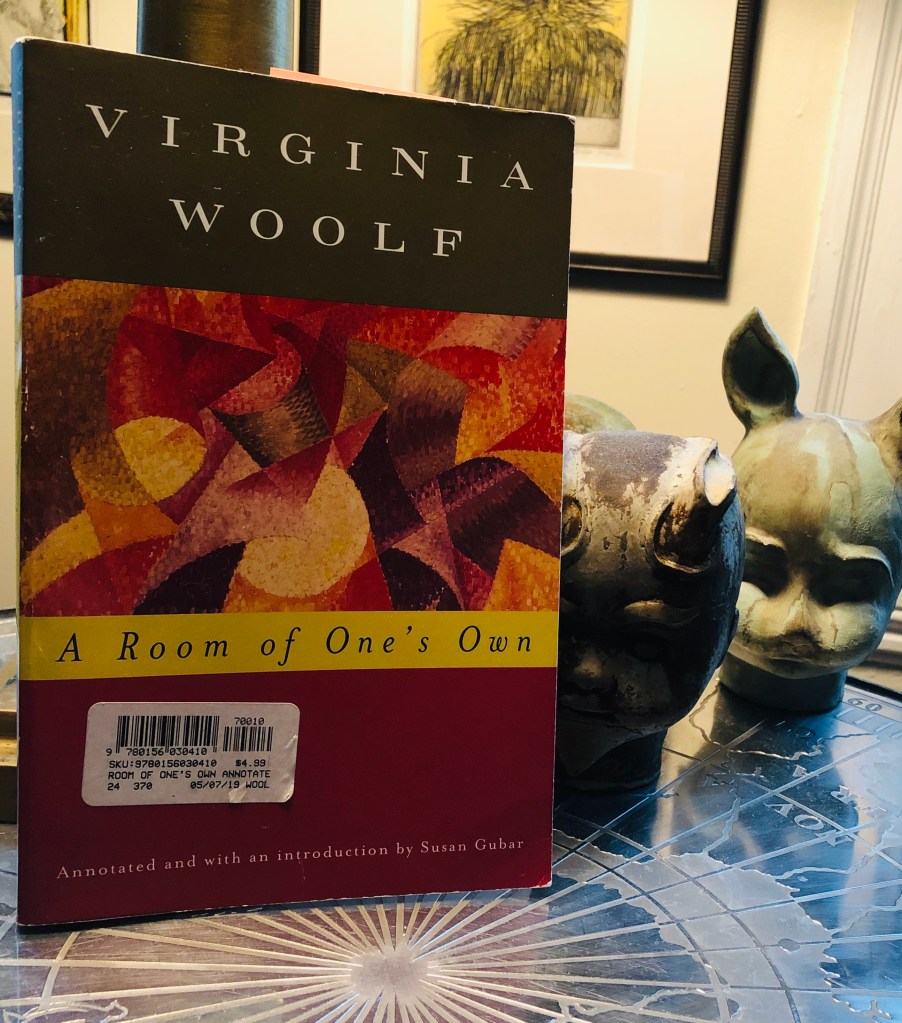
A Room of One’s Own

By Virginia Woolf

ALL POSTS CONTAIN SPOILERS

I really don’t like being wrong.

You’d think I’d be used to it by now, since I’m wrong at least as often as I’m right, but I still hate being wrong with the same furious intensity I did when I was a child, when I would rather have chopped off one of my own fingers than admitted I had been mistaken about something. It irks me, deep in my soul, to look foolish.

And it’s all well and good to be wrong about things that don’t matter, like math or medicine, but one would hope that I would be slightly more reliable on the subject of books. They are, after all, the most important thing in the world, the meaning and substance of my life – one would expect that, if I were going to be right about anything, I might be right about them.

And yet I’m wrong about books all the time. Even more distressing, my wrongness usually takes the same form: I discover, with depressing regularity, that I have disdained an author, often for years, who is actually excellent. Whom, when I actually trouble to read them, I end up loving.

In my defense, I rarely disdain an author for no reason. Usually, I have been forced, as a child in school, to read a classic, and found, in all my teenage wisdom, the classic wanting, and decided that the author was therefore garbage. I did this to John Steinbeck (did not like ‘Of Mice and Men‘); I did this to Zora Neale Hurston (hated ‘Their Eyes Were Watching God‘); and I did this to Virginia Woolf.

It was ‘Mrs. Dalloway‘ that did it. My fifteen year old self was not impressed by ‘Mrs. Dalloway’. I do not remember precisely why – I suspect I thought it was vapid. Or maybe that Mrs. Dalloway herself was vapid, and I did not feel that I should have to spend my time reading about the interior world of a vapid party-planner when there were so many more interesting things to read about, like War and Death and Space Battles. I did not understand yet that it was a novel about trauma, that great tragedies play out quietly in the psyches of ordinary people, probably because I was a teenager and so had no interior world to speak of.

Because I did not like ‘Mrs. Dalloway’, I decided that I did not like Virginia Woolf. I have never read another of her books. But I believe in reading the classics; I’m traditional, and have an idea that one should read The Great Books, even if one really didn’t like ‘Mrs. Dalloway’. And so, when I saw ‘A Room of One’s Own‘ at the Harvard Bookstore Warehouse Sale this summer, I got it.

A Room of One’s Own‘ is an essay, born from two lectures which Woolf gave to women’s colleges of Cambridge. It takes, famously, as its thesis, the problem of Shakespeare’s sister, a woman born with all the talent of Shakespeare, but none of his masculine freedom. Would she, this sister, have left brilliant plays behind her? Not, Woolf concludes, without the time, space, and money to work. Not without a room of her own.

I was not expecting to enjoy ‘A Room of One’s Own‘. I read it entirely out of a sense of duty, an obligation both the Canon and to feminism. ‘A Room of One’s Own’ is a foundational feminist text, one of those books that you, if you are a woman, really ought to have read by now. I somehow graduated from an East Coast liberal arts college without reading it (I won’t say which one, lest they recall my degree), and have felt sort of nagged ever since by my own bad feminism.

I didn’t expect her to be funny. No, not because she’s a woman – because ‘Mrs. Dalloway’ is almost shockingly unfunny, and because about ten years after she published it, Virginia Woolf loaded her pockets with stones and walked into the river Ouse to drown herself, and so I don’t think of her as hilarious.

But, wrong again: she is funny. She’s sardonically, dryly funny, almost caustic. Her gimlet eye misses nothing, she is subtle, but when she cuts, she cuts deep, and her aim is devastating:

“..I thought of that old gentleman, who is dead now, but was a bishop, I think, who declared that it was impossible for any woman, past, present, or to come, to have the genius of Shakespeare. He wrote to the papers about it. He also told a lady who applied to him for information that cats do not as a matter of fact go to heaven, though they have, he added, souls of a sort. How much thinking those old gentlemen used to save one! How the borders of ignorance shrank back at their approach! Cats do not go to heaven. Women cannot write the plays of Shakespeare.” (p. 46)

And she is a beautiful writer, but, of course, we all knew that. What I was not prepared for was how I would feel, as a woman, when this beautiful prose, this clear-eyed analysis, applied itself to the problem of women’s rights.
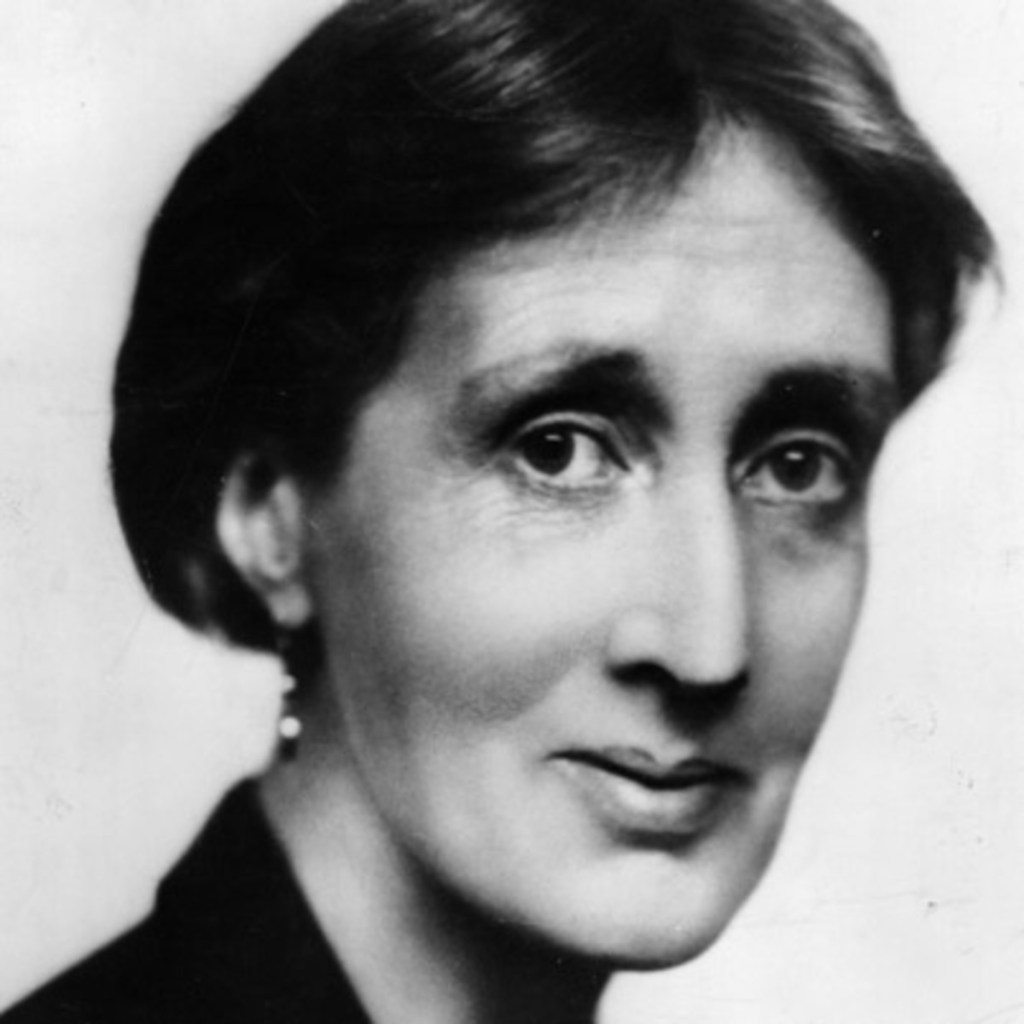
Virginia Woolf

Woolf is a feminist from an earlier time: she isn’t writing about #metoo, or whether Cosmo causes eating disorders. She is writing about whether or not women are as smart as men, whether their minds can ever be as fine as men’s minds, whether they deserve to be educated, whether they can make art. It’s moving to read such a fine writer, such an understated and lovely writer, speak to this: her very existence should prove her point, but you know that it won’t.

I was surprised by her, I suppose: I was expecting something glum, or censorious (I think, upon reflection, that I confused the character of Mrs. Dalloway with Woolf herself – oops). But ‘A Room of One’s Own‘ isn’t censorious at all – it’s a gentle argument, a ripost, to a society which much have been a source of great pain to its author. And so it still consoles now, as long as society remains a source of pain to her readers.

“Women have served all these centuries as looking-glasses possessing the magic and delicious power of reflecting the figure of man at twice it’s natural size….Whatever may be their use in civilised societies, mirrors are essential to all violent and heroic action. That is why Napoleon and Mussolini both insist so emphatically on upon the inferiority of women, for if they were not inferior, they would cease to enlarge. That serves to explain in part the necessity that women so often are to men. And it serves to explain how restless they are under her criticism…For if she begins to tell the truth, the figure in the looking-glass shrinks; his fitness for life is diminished. How is he to go on giving judgement, civilising natives, making laws, writing books, dressing up and speechifying at banquets, unless he can see himself at breakfast and at dinner at least twice the size he really is?” (p. 36)

It’s hard to know whether you are connecting with a work because the work is magnificent, or because you are a woman, or a mix of both. It’s OK for works to have special resonance for certain groups, but I’m always a little uncomfortable when I feel that I am only connecting to a work “as a woman” (like I said, bad feminist).

But Woolf is such a good writer, there is no question that the connection to her work is merely estrogenic. Magnificent prose is magnificent prose, whether its author is invaginated or not.

A fact with which Woolf would doubtless agree. I’m not sure I learned a lot from ‘A Room of One’s Own‘, but I’m also not convinced that that was the point. Rather, ‘A Room of One’s Own’ was a consolation, the reaching out of one woman to another through time. I am very glad I read it, which I suppose serves me right. Wrong again, happily.

I Love Dick

By Chris Kraus

All Posts Contain Spoilers

Have you ever been at an art museum, standing in front of a Pollack or a Mondrian or some other modern masterpiece, and overheard some idiot say, “I could’ve painted that”?  And did you then feel a stab of rage towards that idiot, because a) even if they could have painted it, they didn’t and b) they definitely could not have painted it.  And did you pity them a little, even while you condemned them, for the fact that, by saying something so cretinous out loud and in public, they had inadvertently revealed that not only were they too stupid to create great art, they were too stupid even to understand it?  And did you silently congratulate yourself on your sophistication and humility, on your own ability to see the enormous amount of skill and learning and vision that lies behind deceptively simple art?

Well, I definitely have.  I have, at this point, spent decades feeling superior to imagined masses of people who believe they could have been de Kooning.  In fact, my own (self-witnessed) appreciation of art has become a part of who I believe myself to be: I am the sort of person who would never stand in a museum and confuse myself with Rothko.  I appreciate the vast distance between my own artistic abilities and those of the masters.  I am Someone who Respects Great Art.

All of which made it a little alarming for me to read ‘I Love Dick‘, by Chris Kraus this week and think, over and over again, “I could have written this.”

I Love Dick

I Love Dick‘ was Kraus’s first book.  Published in 1997, it is an epistolary novel, a series of letters from a woman “Chris Kraus” (and her husband, “Sylvère”) to “Dick”, her husband’s friend, with whom she has fallen in love.  Quotation marks aside, the novel was apparently in part a memoir; Kraus was married to Sylvère Lontringer and the eponymous Dick was later identified as the cultural critic Dick Hebdige.

However, the novel isn’t really about either of those men – it’s about Kraus, and about the impoliteness of frank female desire.  It’s about how, when your culture will not recognize your legitimate desires, it robs you and your desires of dignity.  It is about the way that women in unreciprocated lust are ridiculous in our culture (“debased”, to use Kraus’s word).  It is Kraus’s attempt to take back her own dignity by fully inhabiting that debasement.

I loved ‘I Love Dick‘, and when I say, “I could have written this”, I don’t mean it the way the imbecile standing in front of a Rothko means it.  I didn’t mean, “I could have written this because it seems so easy, so amateurish”.  I mean, “I could have written this because I have felt this.”  I mean, “This is true to my lived experience in a way that feel so precise, so accurate, that I feel spied upon.”  I mean, “I am so glad that someone wrote this, and I only wish that it had been me”.

I Love Dick‘ is considered an important feminist text (The Guardian called it “the most important book about men and women written in the last century”), but, if I am being honest, I don’t think I would have picked up ‘I Love Dick’ if it weren’t clear from the title that it was going to be funny.

I’m a feminist, but, like many women, I’m also a victim of the pervasive misogynistic brainwashing which has caused us to equate feminist literature with hectoring shrillness, a certainty that you are about to be lectured by an angry woman who doesn’t approve of you. For this reason, I have tended to avoid “feminist texts” and it is only lately that I have begun to feel that I am missing something.

Part of the problem is that I don’t usually experience books “as a woman”.  If that sounds slightly nonsensical to you, you would be right: I am a woman, and therefore I quite literally experience all books as a woman.  But my own womanhood is not the most salient lens through which I experience literature.  It is rare that my femininity, my life lived within this gender, is the best tool I have for connecting with a text.

Another part of the problem may have been my age. The desire to be unique is more the province of the young. I think, as we get older, we long more for the universal. When I was young, I was interested in my own experience, as a woman or otherwise. I was absorbed in my own story, in the specialness of it. I wasn’t interested the ordinariness of my femininity. I didn’t want to be like everyone else.

Uniqueness is lonely, though, even if it is self-imposed. As I get older, I long to be more like other women, to see myself in their story and see them in mine.

But I found that I did read ‘I Love Dick‘ in large part as a woman.  It is as a woman that I was best able to understand what Kraus felt as she thrashed around in love, and shame, and fear.  And it is as a woman that I was best able to relate to her desire to understand, articulate, and express herself.  And it was a tremendous relief to read ‘I Love Dick’ as a woman because it touches on parts of the feminine experience that are rarely discussed in public.

If womanhood is a house we all inhabit, a large, rambling old house, with an ancient, low-ceilinged main building, with additions and wings and renovations, with lovely and inviting front rooms where we host and smaller, private rooms in the back where we live, with creepy attics and damp basements and even terrifying crawl spaces full of spiders, then ‘I Love Dick’ is a spring cleaning, an airing out of all those corners which we never show to guests.

An irrelevant aside: I am fascinated by the Amazon recommendations algorithm.  When Amazon suggests a product to you based on the item you are browsing, it is essentially telling you what kind of person, in its epistemology, buys this product.  What I have learned from ‘I Love Dick”s Amazon page is that Amazon’s algorithm has not fully grasped the complexities of modern womanhood.  The ‘Sponsored Products Related to this Item’ include: ‘Stone Heart: A Single Mom & Mountain Man Romance’; ‘Bad Seed: A Brother’s Best Friend Romance’; and something beggaring description called ‘Falling For My Dirty Uncle: A Virgin and Billionaire Romance’.  These books are ‘related’ to ‘I Love Dick’ the way gonorrhea is ‘related’ to penicillin.

And the part of me that didn’t love ‘I Love Dick‘ as a woman loved it as someone who spends a lot of time thinking about the meaning of texts.  No shock there: ‘I Love Dick’ is often described as a semiotics text.  Now, ‘semiotics text’ is a descriptor as likely to alienate potential readers as ‘feminist text’. It suggests something recursive and intellectualized, a novel without story, exhausting and obsessed with meaning. And a quick spin through Goodreads will reveal that a lot of people had this reaction to ‘I Love Dick’.

I suspect that some people find analysis alienating, that a parsed emotion is less moving than an emotion merely described.  I don’t feel this way, quite the opposite: explication draws me closer.  I found warmth and wisdom and sadness here, no difficulty, just a winding path.  A novel analyzing love is still a novel about love, and observing something doesn’t make it any less true.  I recognize myself in Kraus’s emotional world, in the snarls and complexity of it all, and I think that many women would.

Kraus was a filmmaker (in fact, much of what ‘I Love Dick’ is about is her reckoning with the failure of her filmmaking career; it is failure transformed, escaped from, into sexual desire, and, really, who hasn’t been there?), and while her book is about love, lust, and failure, it is also about art.  It is about how we use art to understand our own feelings.  It is about the collision of our selves and the art we consume, and how the result is our lives.

The art that Kraus loves does not happen to be the art that I love, but I understand the enormous meaning that she draws from it.  I am, like her, assembled from the parts I have found in art.  And, even if her taste does not suit me, her eye is phenomenal.  She is a witty, biting observer of everything around her, and the greatest pleasure of reading ‘I Love Dick’ is getting to experience Kraus’s voice.  Born, in my opinion, to be a critic, she weaves the art she consumes into her life, and then shreds the result with unforgiving powers of observation:

“Years later Chris would realize that her fondness for bad art is exactly like Jane Eyre’s attraction to Rochester, a mean horse-faced junky: bad characters invite invention.” (p. 21)

“”As soon as sex takes place, we fall,” she wrote, thinking, knowing from experience, that sex short circuits all imaginative exchange.  The two together get too scary.  So she wrote some more about Henry James.” (p. 51)

“Because [Chris and Sylvère] are no longer having sex, the two maintain their intimacy via deconstruction: i.e., they tell each other everything.” (p. 21)

The meta-irony of ‘I Love Dick’ is that the novel itself, about a woman’s use of art to understand her own feminine sexuality, has become a piece of art to help other women (like me) understand ours. Just as I wish I had written ‘I Love Dick’, I suspect Kraus wrote it because she herself needed to read a work like it.

“If the coyote is the last surviving animal, hatred’s got to be the last emotion in the world.” (p. 160)

“How do you continue when the connection to the other person is broken (when the connection is broken to yourself)?  To be in love with someone means believing that to be in someone else’s presence is the only means of being, completely, yourself.” (p. 168)

“And isn’t sincerity just the denial of complexity?” (p. 181)

“Isn’t sincerity just the denial of complexity?”  I could have written that.