Gone Girl

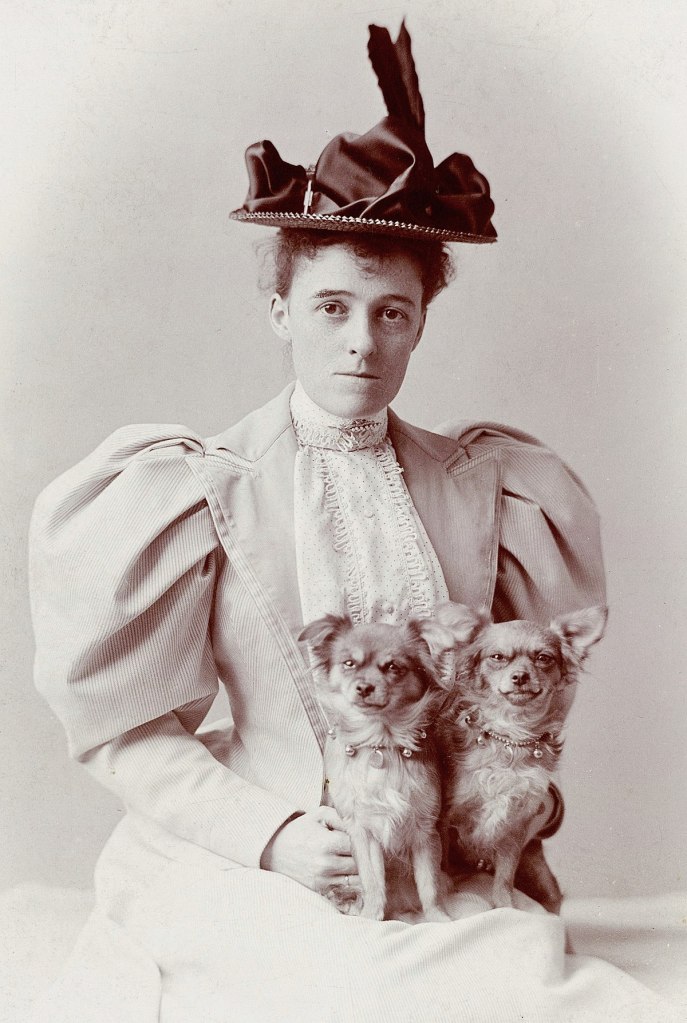
By Gillian Flynn

ALL POSTS CONTAIN SPOILERS

I know that everyone loves ‘Gone Girl’. I mean, I love ‘Gone Girl’. I read it, years ago, in one swallow: a beautiful summer afternoon spent inside, on the couch, unable to tear myself away. I have a lot of respect for it as a novel, the craft, the excellent execution of it.

But the other day I finally got around to watching the movie (which I also think was competent and gripping), and was reminded of something that tweaked me about the story, and, frankly, about the genre in general.

A little context, for the two people alive who haven’t read the book or seen the movie: On their five year wedding anniversary, Nick Dunne’s wife Amy vanishes from their home. The first half of ‘Gone Girl’ is a murder mystery, told both from Nick’s perspective in the days following her disappearance, and from excerpts of Amy’s diary during the years of their courtship and early marriage. As the days pass, more and more evidence emerges, all of which points to Nick having killed Amy. He has been having an affair. He has just taken out a large life insurance policy on her. Amy’s best friend comes forward and tells police that Amy feared that her husband would kill her.

It’s a masterpiece of unreliable narration, and Flynn manages to wind her readers through almost two hundred pages of Nick Dunne’s first person account without ever revealing whether or not he murdered his wife. I can’t really understate how impressed I am by her ability to do that. Two hundred pages of first person narration without revealing, in either direction, whether or not that person is a murderer? It’s a real high-wire act of suspenseful dubiety, and it’s completely successful.

However, after a deft, tense first half, Flynn abandons her well-constructed ambiguity and turns to that favorite device of genre fiction: the psychopath.

Amy is alive, of course. She has elaborately, painstakingly framed her husband for a murder that has not happened. And now she is free, living in disguise and watching her brilliant revenge play out from a safe distance.

The psychopathic genius is a tempting plot device. He is a human without humanity  He is capable of any evil, smarter than his opponents, and conveniently unencumbered by normal emotional frailties.  There aren’t any characterological weaknesses to limit him, and so he can enact any outlandish deviousness his author dreams up for him.

However, there are two big problems with the meticulous psychopath.

First, he is totally unrealistic. In real life, antisocial personalities are characterized not only by a lack of empathy, but also by impulsivity, recklessness, and unlawful behavior.  Flynn’s psychopath, however, shares with her fictional brethren a distinct lack of impetuosity.  The premise of ‘Gone Girl’ rests on the ability of a flamboyant sociopath to plan minutely and far in advance, to mask their thoughts and emotions and to forego any short-term satisfaction in order to execute an elaborate and excruciating revenge.

In real life, this is very un-psychopathic behavior.  The diagnostic criteria of antisocial personality disorder include “failure to conform to social norms with respect to lawful behaviors, as indicated by repeatedly performing acts that are grounds for arrest”, “consistent irresponsibility, as indicated by repeated failure to sustain consistent work behavior or honor financial obligations”, and “impulsivity and failure to plan ahead”.  It is striking that these traits are not only absent in Flynn’s psychopath, they would severely limit, if not completely obviate, her ability to plan and carry out her scheme.

Gillian Flynn

Second, the literary psychopath isn’t actually interesting. While he may have the immediate magnetism of a car wreck, he isn’t actually a character.  He has no internal conflict; he is all plot. 

Now, that can be OK. When plot is all that matters, he’s fine.  That’s why he does such reliable work in cop dramas, soap operas, and beach reads. But he isn’t a person – he’s a tool that an author can use to advance action. And he’s very useful, obviously, but this utility has caused him to be badly overused in fiction.  Once, he was shocking, novel, outre. Now, he’s everywhere, committing ever more elaborate crimes, devising ever more esoteric tortures for the rest of us. He’s become predictable.

Which is a shame, because the beauty of the first half of ‘Gone Girl’ was how difficult it was to predict. The tension Flynn manages to build in the first half of the novel is effective and affecting.  The different early perspectives offered by Nick and Amy Dunne make the reader question not only the reality of their marriage, but also the ability of any two people to ever really know each other. The first, better, half of ‘Gone Girl’ is a completely different book: one about intimacy, about whether it is even possible.  It offers a view of marriage that is not a shared life, but merely coincident delusions.  It is a dark vision, and it is much more compelling than the Dances with Psychos that the book becomes.

Inside the Third Reich

By Albert Speer

In general, I don’t think it’s fruitful to spend a lot of time trying to figure Hitler out.

I certainly understand the impulse: when we discover monsters in our midst, we are strongly motivated to examine them carefully.  Partly, this is prurient: monsters are fascinating.  But partly, this is survival: we must learn to spot them, so that we can stop them sooner in the future.

But to stop them, we don’t really need to understand them; we just need to be able to recognize them.  Which is lucky for us, because the truth is that we will never really be able to satisfy ourselves. There is no window into the minds of our villains that will ever truly explain them.

Hitler is the best and most important example of this incomprehensibility.  Oceans of ink have been spilled examining and psychoanalyzing Hitler through his books, his speeches, his relationships, and his actions. Nevertheless, he remains a cipher.  Why did he do the things he did?  Was he an evil mastermind? An ordinary megalomaniac who happened to be at the wrong place at the wrong time?  Was he mentally ill? Did he really believe all the things he preached, or was he merely manipulating the people around him?  How are we to understand him?

The question which has always most troubled me (and everyone else) is: did Hitler understand that his actions were wrong?  Let’s take, for example, the attempted extermination of the Jewish people: did Hitler understand that that was wrong? Even if he did not, did he get that other people would think it was wrong?  He employed euphemisms when discussing it, which implies that he did, but then, what did he make of that?  Did he believe that he acted for good but that he alone in the world saw the truth?  Did he believe that everyone secretly agreed with him and that only he had the courage to admit it?  Or did he fail to trouble himself with questions of right and wrong at all?

As I said, I don’t usually think too much about these questions, since I believe that they are unanswerable.  We will never know what Hitler “really” believed – it is enough to know what he definitely did.

Speer, with Hitler, probably around 1938

But I recently read Albert Speer’s memoir, ‘Inside the Third Reich’, and it got me grasping again after this old question.  Speer was Hitler’s architect and then, later, his Minister of Armaments.  He spent quite a lot of time in Hitler’s company, and in his memoirs, he mentions something that Hitler said to him in 1936:

“There are two possibilities for me: to win through with all my plans, or to fail.  If I win, I shall be one of the greatest men in history.  If I fail, I shall be condemned, despised, and damned.”

Despite my own good advice, I have become fixated on this quotation because it implies that Hitler was aware that other people would consider his actions atrocious.  He may have thought they were wrong. He may have considered the atrocity negotiable – he seemed to believe that victories would justify him – but he was cognizant of the fact that, in the world he inhabited, his plans were unacceptable.  He saw that, in order to be seen as heroic, he would need to remake the world.

I am particularly struck by his use of the word ‘damned’.  Damnation is total; it describes the unredeemable.  His use of it suggests that he understood the scale of the problem. It means he knew that his actions would be considered not merely bad, but in fact evil.  And, to be frank, I sort of quail before the idea of a mind which can see the evil it is about to do as evil and still do it.

Of course, I am not sure I believe that Hitler actually said that. Speer is fascinating to read in part because he is totally untrustworthy. Clearly a sycophant, he managed to intercalate himself into Hitler’s innermost circles; nevertheless, in his memoirs (written from prison), he positions himself as an intellectual, and pretends to have been able to analyze the workings of the Third Reich from an emotional distance. He does not speak to the atrocities he helped commit, and does not offer a satisfying explanation for how he was taken in. He clearly understands that his proximity to Hitler is the selling point of his memoir, and he endeavors to highlight their closeness while shielding himself from calumny.

And this quote is exactly the kind of quote of which we should be skeptical: historical, self-aware, foreshadowing, significant, intimate. It’s too neat, too good. It is entirely possible, if not likely, that Hitler never said anything such thing.

Which speaks to my original point: we will never know. And even if the quote is legitimate, even if it offers a glimpse into Hitler’s darkness, it’s probably better not to peer too hard after it.  Ultimately, Hitler will never satisfy those of us who want to understand evil – he will never yield up his own true beliefs.  Maybe it will suffice to say that, in this one case, Hitler was correct: he did fail, and so he is condemned, despised, and damned.

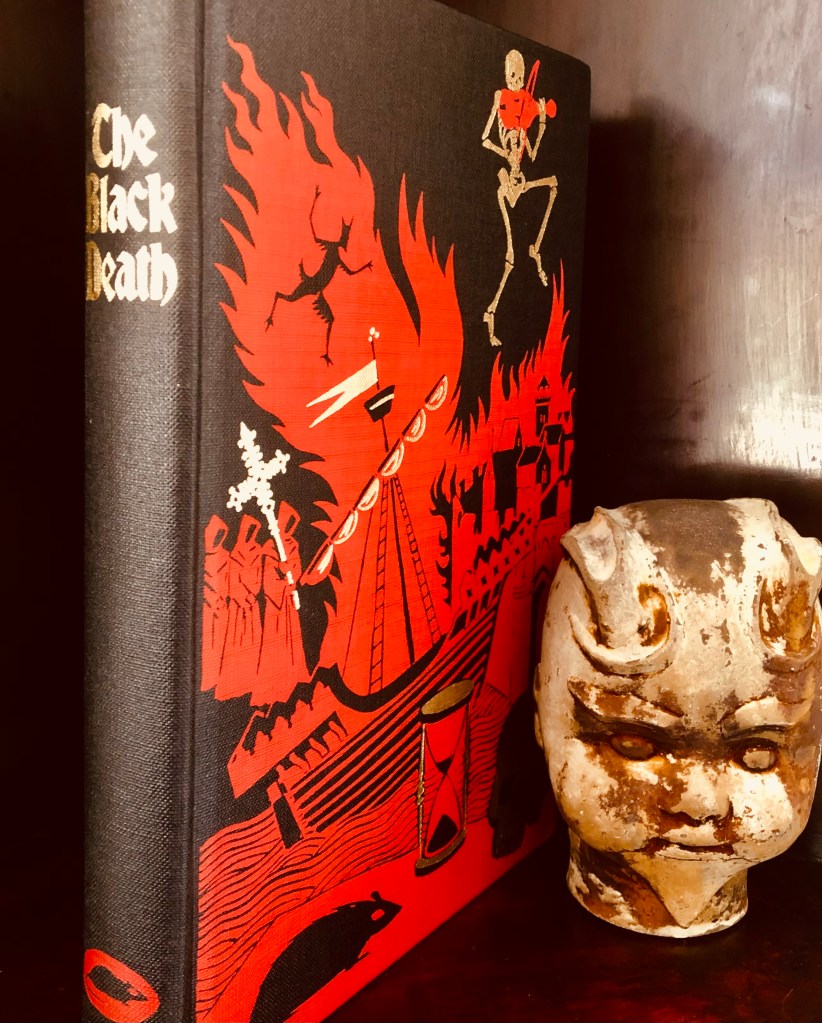
The Black Death

By Philip Ziegler

It’s a dodgy proposition, reading about a pandemic while living through one.

I had hoped that picking up ‘The Black Death’ would broaden my perspective, pull me out of the stress of the past few years and remind me that we are all subject to the great shiftings of history. Remind me that there have been other sufferings and that this, too, shall pass.

It worked, but not as I had expected. Rather than reconciling me to the vicissitudes of fate, reading ‘The Black Death’ reminded me, forcefully, that human history (including our own) is so often farce. That we are imperfect beings groping blindly after solutions to problems that we rarely even understand. That there isn’t much to do but learn to laugh at ourselves, even while we suffer.

So, in that spirit, as we limp through our own pandemic, I have culled from this book a list of tips for avoiding the plague, from people who lived through it:

  • Plague is carried by “miasmic air”, so avoid the coast – miasmic air might waft off the sea.
  • On the other hand, it might not.
  • Avoid marshes and windy places for the same (possible) reason.
  • Burn nice-smelling woods and plants – good smells may drive off the miasmic air. Ash, juniper, musk, cyprus, laurel, rosemary are all good.
  • Likewise, fill your home with flowers.
  • Bad smells may also drive off miasmic air, so hang your head over the latrine and breathe deeply (it does not say how often or for how long – better safe than sorry).
  • Sprinkle rose-water and vinegar on the floor of your house.
  • Carry around an apple – smell that.
  • Live in a house that faces north.
  • Avoid lepers: they are jealous and may try to poison you.
  • Lie around – do not exercise.  When you exercise, you breathe more heavily and will breathe more miasmic air (perhaps, if you are desperate, you may exercise in the latrine?).
  • For this reason, definitely do not have sex, under any circumstances. If you must, try not to exert yourself too much.
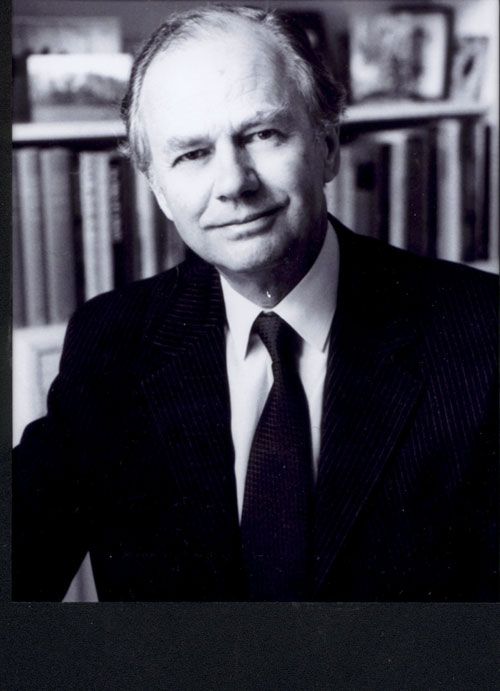
Philip Ziegler
  • Don’t sleep on your back.
  • Don’t sleep after eating.
  • Speaking of eating, don’t eat fish – they come from the miasmic sea.
  • Don’t eat hard-boiled eggs.
  • Don’t eat lettuce.
  • If you must eat, mix ten-year-old treacle with wine and chopped snake – eat that.
  • Grind an emerald into powder so strong that “if a toad looked at it, its eyes would crack” – eat that.
  • If you must drink, mix a drink of lemon, rose-water, peppermint, and apple-syrup – drink that.
  • Mix one ounce of gold with eleven ounces of quicksilver over heat, “let the quicksilver escape”, add forty-seven ounces of water of borage, store for three days over heat in an air-tight container, then drink that.
  • Take an amethyst, etch onto it a picture of man bowing and holding a snake, its head in his right hand, and its tail in his left.  Set the amethyst in a gold ring.  Wear that.
  • Definitely do not bathe.
  • If you must wash, only wash your hands with vinegar or rose-water.
  • Get bled – try to give eight pounds (say, three and a half liters) of blood.
  • Even though everyone around you is dying, don’t get sad.  This makes you more susceptible to the miasma.

And above all, stay calm.

Marie Antoinette

By Stefan Zweig

ALL POSTS CONTAIN SPOILERS

I’m not sure what to do about Marie Antoinette.

I realize that there isn’t, strictly speaking, anything to actually be done about her at this point – our decision-tree was pruned dramatically when she was guillotined. But she is one of the more polarizing figures in European history (which does not lack for them), and she was killed during one of its most morally complicated upheavals; it feels incumbent on even a casual consumer of history to have an opinion about her.

Still, making a close read of Marie Antoinette’s life wouldn’t have felt urgent except that one of my favorite writers, Stefan Zweig, wrote a biography of her: ‘Marie Antoinette: the Portrait of an Average Woman’, based largely on Antoinette’s own letters.  It’s a curious project: despite its title, it is a sympathetic biography (let’s not forget that, on the spectrum of things said about Marie Antoinette over the years, ‘average’ is positively kindly), even a love letter of sorts, written by Zweig to a woman who, despite her imperfections, seems to have captured his heart centuries too late.

It’s always interesting watching a biographer try and force an uncooperative subject into their narrative mold. Often, biographies of this sort feel less like historical documents than rhetorical exercises, advocacy rather than education. Reading ‘Marie Antoinette’ felt more than anything like listening to the closing arguments of a good defense lawyer. It was familiar – I had a similar experience a few years ago reading Antonia Fraser’s biography of Mary Stewart, Queen of Scots, which was a long and heroic attempt to make a real dimwit seem like a sophisticated, evolved, and politically subtle monarch.

Likewise, even Zweig’s best efforts can’t hide the fact that Marie Antoinette was a bizarrely spoiled young woman who, for most of her life, spent her limited mental energies entirely on the superficial and, particularly, on herself (the image of her cavorting in her “peasant hut” in Petite Trianon is impossible to forget).  It is also clear that her own stupidity and cupidity contributed to the manner of her death: despite receiving a great deal of very sound advice from a number of qualified people (not least her mother, the forbidding and formidable Maria Teresa of Austria), she persisted in acting in an extravagantly self-destructive way.

But I don’t always listen to my mother, either, and if Marie Antoinette was a self-involved moron, she was also more complicated than I had realized.  She loved her children (not a universal trait among European monarchs), and seems to have had abiding and deep friendships.  At the end of her life, she displayed great bravery and great composure.

She also, at least according to Zweig, had one great and lasting love, Axel Comte de Fersen.  The two of them, the Queen and the Swedish nobleman, loved each other for many years; Fersen even orchestrated the royal family’s attempted escape from the Tuileries.  Fersen never married, writing to his sister, “I cannot belong to the one woman to whom I should like to belong and who loves me, so I will not belong to anyone.”

I certainly do not believe that receiving Great Love makes you a Great Person. But Zweig wisely realizes that Fersen is Antoinette’s best advocate, and devotes a lot of space to their love story. In fact, it is quite difficult to read Fersen’s letters and not feel your heart soften towards the woman who inspired them:

“She for whom I lived, since I have never ceased to love her…she for whom I would have sacrificed everything…she whom I loved so dearly, and for whom I would have given my life a thousand times – is no more.  God, why have you crushed me thus…I do not know how I go on living, I do not know how to support my suffering, which is intense and which nothing can ever efface.  Always she will be present in my memory and I shall never cease to bewail her…The sole object of my interest has ceased to exist; she alone meant everything to me…I care to speak of nothing but her, to recall the happy moments of my life.  Alas, nothing is left of them but memories which, however, I shall preserve so long as my life lasts.”

Fersen was devastated by Antoinette’s execution in 1793, and never really recovered, though he lived for nearly two more decades. He died in 1810, beaten to death by an angry mob that believed he had murdered the heir to the throne of Sweden.

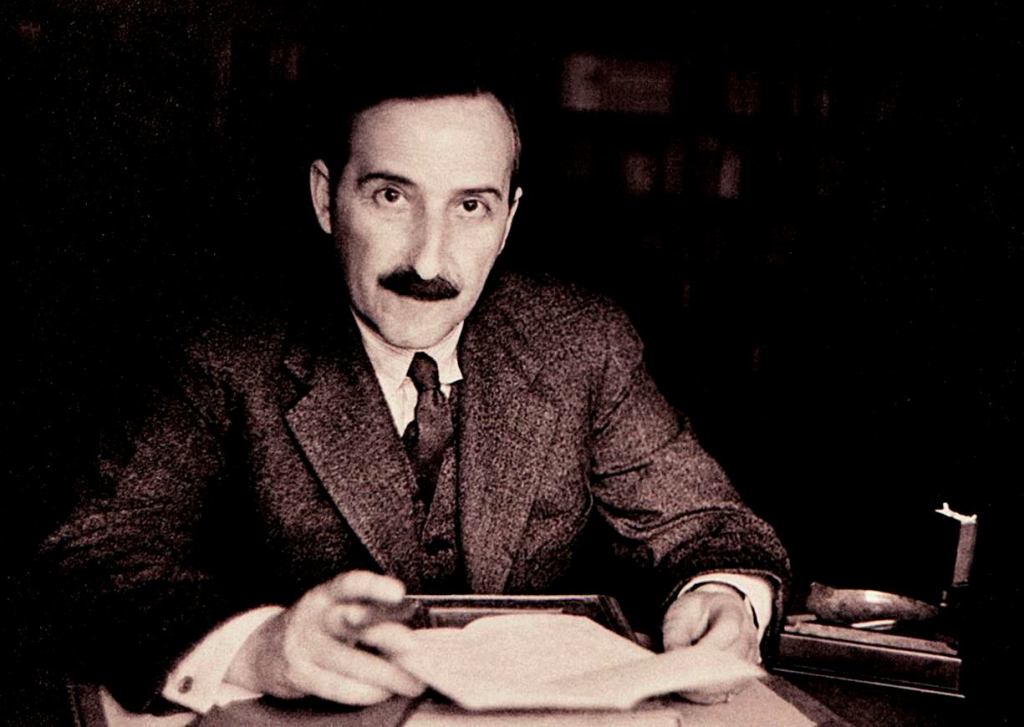
Stefan Zweig

Antoinette is an easy historical villain. She inhabited such extraordinary privilege before her death that it seems almost perverse to work to give her depth, post-mortem. Better to spend that effort investigating the lives of the millions of unremembered poor whose suffering funded her obliviousness. As a moral project, I’m not sure that a defense of Marie Antoinette should be a high priority for anyone. But Zweig is a literary author, not a moralist. And he is so clearly fond of Antoinette, which gives me pause. I respect him too much not to pay attention to his affections.

In the end, I’m not convinced by Zweig, but I am impressed with the exercise. In a way, Zweig’s project is no less romantic than Fersen’s: the construction of a monument to the woman they both seem to have loved, in their ways. If I am not moved by Antoinette herself, I am moved by their love.

And that’s not the worst fate in the world, is it? To be redeemed not by our own actions, but by the devotion of those that know and love us? Not a bad memorial, in the end.

Mao: A Life

By Philip Short

I’ve been wanting to read Philip Short’s biography of Mao Zedong for a while. I am, secretly, a sucker for historical biography, and I have a particular taste for humanity’s anti-heroes. I’ll brush right by biographies of inventors, statesmen, visionaries; my shelves are clogged with insane monarchs, conquerers, murderers and war-mongers.

Mao Zedong, the Communist revolutionary who would rule China for nearly 30 years, is a subject of intense fascination to those of us who like to peer into darkness. He is considered the greatest mass murderer of all time – it is possible that he is responsible for more deaths than Hitler and Stalin combined (high estimates place his death toll at around 80 million people). So Short’s biography was on my list.

It’s a great, whopping book: some 630 pages of dense biographical information. It’s beautifully presented: clear, thorough, persuasive. I learned a lot, but, having finished it, I find that I have been arrested by a single moment, and my emotional reaction to that moment has entirely dominated my impression of the book.

In 1918, a young Mao Zedong was a nobody from Hunan province. He moved to Beijing and went to work as a junior librarian in the Beijing University Library.  He (Mao) wrote later:

“My office was so low that people avoided me.  One of my tasks was to register the names of people who came to read newspapers, but to most of them I didn’t exist as a human being.  Among those who came to read.  I recognized the names of famous leaders of the ‘renaissance’ movement, men…in whom I was intensely interested.  I tried to begin conversations with them on political and cultural subjects, but they were very busy men.  They had no time to listen to an assistant librarian speaking southern dialect.” (p. 83)

This passage, Mao’s recollections of being ignored by the intellectuals he so admired, is excerpted very early in Short’s biography. However, having finished it, I find that this vignette has stuck with me more than any other from Mao’s life.

That clerk would go on to rule the most populous country on earth.  He would preside over a regime that killed tens of millions of people.  He is, more than any other figure, the architect of China’s current global position. But in 1918, he was being snubbed by men history has forgotten.  

How many people do you interact with every week?  How many people serve you coffee, check out your items, pump your gas, see you to your table, drive your Uber?

And those people, those are just the ones you see!  What about the people who clean up after you, fix what you break, prepare the food you eat, pick up your trash, deliver your packages?  How big is the army that serves you invisibly?  How many lives intersect with yours every day?

What if one of them will become Mao?

I’ve been disturbing myself with this concept for days now, rolling it around in my head.

Of course, it’s always unnerving to imagine that you might have been brushed by enormity. It’s disconcerting to imagine that history’s next great killer might be taking your order. But what’s even spookier, to me, is the fact that, later, when he was the Great Man, those men never even realized that they had met Mao. They would not have recollected his face, because we don’t remember people that don’t matter. They would never know that their lives had intersected with his, that they had slighted the man who would become Mao.

But what frightens me even more is the thought that, perhaps, Mao did not know he would become Mao. Maybe, if he had known, he would not have wanted to become Mao. We think of the great villains of history as born, but it is, of course, possible that they are made. The clerk in the Beijing University library would become Mao Zedong, we know now, but, in 1918, he had not yet.  And maybe he need not have.

There are two ways to see the future which lay ahead of that clerk: in one, Mao Zedong was inevitable. He would become the man we all know, would find his way to his role, would make space in history for himself.

But it is equally possible that he only might have become Mao. Perhaps Mao, as we know him, was the result of thousands of small accidents, the end product of innumerable coincidences. What if those moments hadn’t happened to him? What if they had happened to someone else? Perhaps many men might have become Mao – perhaps, under the right circumstances, most men.  Maybe history could make murderers of us all, if she chose.

Philip Short

This isn’t a movie: I don’t believe that Mao became a mass murderer because of those slights.  I don’t believe that, if one of these Chinese eminences had simply paid Mao Zedong the respect of answering him, the great storm of the Chinese Communist Party might have turned at the last moment and headed out to sea, that millions might have been saved.  And maybe this whole idea is wrong, and historical monsters, like other freaks of nature, just happen: maybe Mao came into this world broken and dangerous and nothing was going to change that.

But isn’t it frightening to think that, perhaps, some large number of us carry the potential for great or terrible deeds inside us, and we wait only for the right combination of events to draw us into the open, where we become the stuff of statues or nightmares?

I like to believe, as most of us do, that there are no accidents of fate which would twist me so badly. That there is no outcome in which I order millions of my fellows to their deaths.  There is no lower creature than a genocidaire – I choose to believe I could not become one. But that anonymous clerk in the Beijing University Library is dogging me and now, I see the future monsters of history everywhere I look, in the world all around me.  Because, even if we are not monsters yet, who knows what we will become?

The Collected Ghost Stories of M.R. James

By M.R. James

I’m sorry to tell you, but the title of this post is misleading: I am not going to talk about ‘The Collected Ghost Stories of M.R. James’ today. Instead, I’m going to talk about the introduction to the 2011 Oxford World’s Classics edition of the ‘Collected Ghost Stories by M. R. James’, written by one Darryl Jones.

M.R. James

Remembered best as a horror writer, Montague Rhodes James was also an accomplished medieval scholar and antiquarian. Accordingly, he was a master of what is sometimes called “antiquarian horror”, namely horror that centers around items or students of antiquity (think cursed artifacts, ancient manuscripts with terrible secrets, stuff like that).  Importantly, he seems to have led a largely hermetic and unisex existence: in 1905, he became the provost of King’s College, Cambridge, and he served until 1918, when he left to become the provost of Eton College, a position he held until his death in 1936.

Despite being backwards-looking, the creepiness of James’ stories holds up beautifully, and it’s difficult to overstate the influence he has had on the genre. Take, as one example, ‘A School Story’, in which two men compare the ghost stories of their school days.  Here is an image that should be familiar to anyone who saw ‘The Blair Witch Project’:

“First there was the house with a room in which a series of people insisted on passing a night; and each of them in the morning was found kneeling in a corner, and had just time to say, ‘I’ve seen it,’ and died.”

Like Lovecraft (writing around the same time), James is at his creepiest at moments like this, when he leaves things unsaid.  The most grisly action, the terrible spectre, always appears offscreen, and is more unsettling because you have to imagine it yourself. James is very deft in this space, in the gesturing to horror, in inviting the reader to participate in designing the frightening thing.

Of course, the danger with leaving too much to your readers’ imagination is that some readers will bring their own, strange baggage to the encounter.  Enter Darryl Jones, Professor of Modern British Literature and Culture at Trinity College Dublin, who wrote the (otherwise) very good introduction to the 2011 ‘Collected Ghost Stories by M. R. James’.

My complaint with Jones is a small, but important, one. At one point in his (really very good and helpful) introduction, Jones spends a while dissecting James’ resistance to marriage and preference for male relationships before turning to this passage, from ‘Casting the Runes’:

“…he put his hand into the well-known nook under the pillow: only, it did not get so far.  What he touched was, according to his account, a mouth, with teeth, and with hair about it, and, he declares, not the mouth of a human being.”

Jones then calmly makes the following statement: “…this image of the hairy, fanged mouth…is a powerful symbol of sexual terror, a vagina dentata.”

Is it, Darryl? Is it really?

Jones didn’t invent the vagina dentata, or vagina with teeth; it appears in Jungian literature, and in several South American, Ainu, and Hindu folk tales (as well as in the memorably bad horror movie ‘Teeth’).  It’s hardly a common trope, though, and while most of Jones’ analysis seems straightforward and sound, this abrupt veer into genitalia seems more his problem than James’.  Surely, other perfectly normal and astute readers might have read and reread James’ passage without thinking, ‘Oh, yes, that’s clearly a toothed vagina”.

Indeed, Jones finds vaginas all over the place.  In ‘The Treasure of Abbot Thomas’, the antiquarian Somerton is exploring a ‘dark cavity’ inside a well when he meets “the extremity of terror and repulsion which a man can endure without losing his mind”.  He is “conscious of a most horrible smell of mould, and of a cold kind of face pressed against my own, and of several – I don’t know how many – legs or arms or tentacles or something clinging to my body.” This story, explains Jones, “is ultimately a tale of uncontrollable sexual terror, a quest which leads Mr. Somerton to this nightmare vagina, and an encounter which he barely survives.”

Jones’ argument, namely that James’ cloistered and all-male life might have indicated a fear of female company, is not unreasonable on its face. Nor is it unreasonable to ask whether that fear may have found its way into James’ writing as, to quote Jones, “a nightmare image of the monstrous-feminine”.

However, I’m not persuaded by the examples Jones gives. I’ll put it more plainly: it’s not obvious to me that every menacing crevice must necessarily be a vagina.

James may well have eschewed female company, and it may be the case that “the lifelong appeal of institutions for James was that they provided the security of all-male environments”.  He may have been a homosexual, but does that really mean that there lurked in every dark corner of his expansive imagination…a vagina? 

I don’t want to make this all about me, but, as a person with a vagina, it’s difficult not to take this a tiny bit personally. I would certainly have hoped that nothing on my body could be described as eliciting “the extremity of terror and repulsion which a man can endure without losing his mind”. The trouble is that Jones seems to assume that every dank environment, every toothed oriface, every bad smell, must be a vagina. Worse, that he assumes it’s obvious. Reading his introduction, one starts to wonder whether, for a certain class of man, all monsters are really just vaginas. Some of Jones’ examples are real stretches, too – I don’t want to speak for other women, but I’ve never heard of a vagina with tentacles.

It’s a minor complaint, in the grand scheme of things, but I would like make this small point: the world is a large place, full of terrible things, and not all of them have to be vaginas. We can imagine other monsters, can we not? Sometimes, a cave is just a cave.

The Age Of Innocence

By Edith Wharton

ALL POSTS CONTAIN SPOILERS

I’ve reached a point in my life when I have probably forgotten most of what I’ve read.

I estimate that I have read, on average, seventy-five books a year for the past twenty years. Some of those books have been, basically, wiped from my working memory. I will read back over my reading list and think, “Oh yeah, I did read that.” There are classics, Great Books, which I have read and about which I can recall absolutely nothing at all (‘The Adventures of Augie March’, for example – I couldn’t tell you what that book was about with a gun to my head). Many of the books I’ve read live in my memory as ghosts, barely discernible but definitely there (‘On Human Bondage’: I’m pretty sure someone falls in love with a waitress).

On the other hand, some books stay with me with extraordinary vividness. More than that, there are passages that I can recall almost word for word, decades after I read them. These passages have meaningfully changed me, and I carry them through my life, using them to understand myself and the world around me.

There is no rhyme or reason to what lodges in my heart in this way. Sometimes, it’s not even a passage in the traditional sense: it is a moment, or a single sentence. But they have shaped me, these passages, informed my ideas of love and honor and grief.

The end of ‘The Age of Innocence’ is one of those moments. I have carried the end of that book with me for years; I remember it, I’m haunted by it. I love it, and I think it is one of the most beautiful, poignant, humane moments in literature.

‘The Age of Innocence’ is the story of Newland Archer. Newland is a child of one of New York City’s most prominent families, the oldest blood in the New World. He is engaged to, and marries, May Welland, a young woman from an equally illustrious family. May is kind and lovely but utterly proper – everyone agrees that he has made a great match.

However, one night, Newland is introduced to the Countess Olenska. The Countess, who is May’s cousin, has fled her marriage to a wicked European count. She is living in New York, a woman separated from her husband, an object of pity and mild scandal. She is different from any woman Newland has ever known: independent in thought, unconventional, and interesting. Certainly, she is quite different from the entirely conventional May. As Newland falls more and more desperately in love with Olenska, he begins to chafe at the restraints of New York high society, and the norms which circumscribe his life.

Eventually, he and the Countess Olenska determine that they will run away together. On the eve of their flight, though, May comes to him and tells him that she is pregnant. Newland is unwilling, or unable, to abandon his young family, and Countess Olenska leaves New York City.

The very last, short section of the book takes place decades later. Newland Archer is a well-respected widower, a New York City fixture, taking a trip with his adult son, Dallas, to Paris. He learns that the Countess Olenska, now a widow herself, is also in Paris. Newland, finally free of the wife with whom he stayed out of obligation, decides to visit her one afternoon. On his way, though, he has this conversation with his son:

“‘…But mother said-‘

‘Your mother?’

‘Yes: the day before she died. It was when she sent me alone – you remember? She said she knew we were safe with you, and always would be, because once, when she asked you to, you’d given up the thing you most wanted.’

Archer received this strange communication in silence. His eyes remained unseeingly fixed on the thronged sunlit square below the window. At length he said in a low voice: ‘She never asked me.’

‘No, I forgot. You never did ask each other anything, did you? And you never told each other anything. You just sat and watched each other, and guessed at what was going on underneath…’

Archer did not accompany his son to Versailles. He preferred to spend the afternoon in solitary roamings through Paris. He had to deal all at once with the packed regrets and stifled memories of an unarticulate lifetime.

After a while he did not regret Dallas’s indiscretion. It seemed to take an iron band from his heart to know that, after all, someone had guessed and pitied…And that it should have been his wife moved him indescribably.”

Newland decides not to visit the countess. He will never see her again.

We live in a romantic culture. Most of us would be sympathetic, I think, to the idea that Newland should have pursued romantic love. We conflate romance and actualization: we feel, instinctively, that Newland was denied something fundamental when he was denied his chance to spend an unconventional life with the woman he loved.

Newland chooses duty over romance – this is a choice we understand. But we expect, at the end of his life, when his wife is dead and his duty is discharged, that Newland will choose to see his countess, to be reunited with her. His decision not to changed the way I think about the world.

Edith Wharton

I have pondered this passage for years. Not at all dramatic, is it? You could drive right past it without noticing, if you were sprinting for the end. I cannot articulate what it means to me. It is that sentence, “It seemed to take an iron band from his heart to know that, after all, someone had guessed and pitied…”, the suffering it implies, which moves me. The idea of a life so lonely (“the packed regrets and stifled memories of an unarticulate lifetime”) that even the knowledge of a witness, the knowledge of not having been invisible in your sadness, could be so powerful.

Or perhaps it is the quiet, desperate dignity of a man choosing to honor the life he had instead of the life he wanted. Of the understanding that we cannot have all things, and perhaps it is best simply to be what we are.

I think, when I was younger, I became obsessed with this passage because I didn’t really understand Newland’s choice. But, as I have gotten older, I understand better that life is often full of grief for what we did not have, did not do. Very few of us make it through our lives without wondering after, longing for, another path, at least for a time. It is too late to chase what might have been – all that remains is to honor and enjoy what was. And the silent, loving witness of his wife reminds Newland that what was, while not perfect, while not romantic, was worthy.

I understand, in a way I could not before, that Newland, at the end of his life, chooses himself. Newland’s dearest wish had been taken from him by the inopportune pregnancy of his wife. Only, in the end, by renouncing the Countess again could Newland claim the choice as his own. It was the only way to make his peace, I think, with the life he had.

There comes in a time in our lives when what we wish, most dearly, is not to regret any longer. The time is spent – the only choice that remains is whether or not to be at peace with what has happened. What ‘The Age of Innocence’ taught me is that, while the price of that peace might be high indeed, it is worth paying.

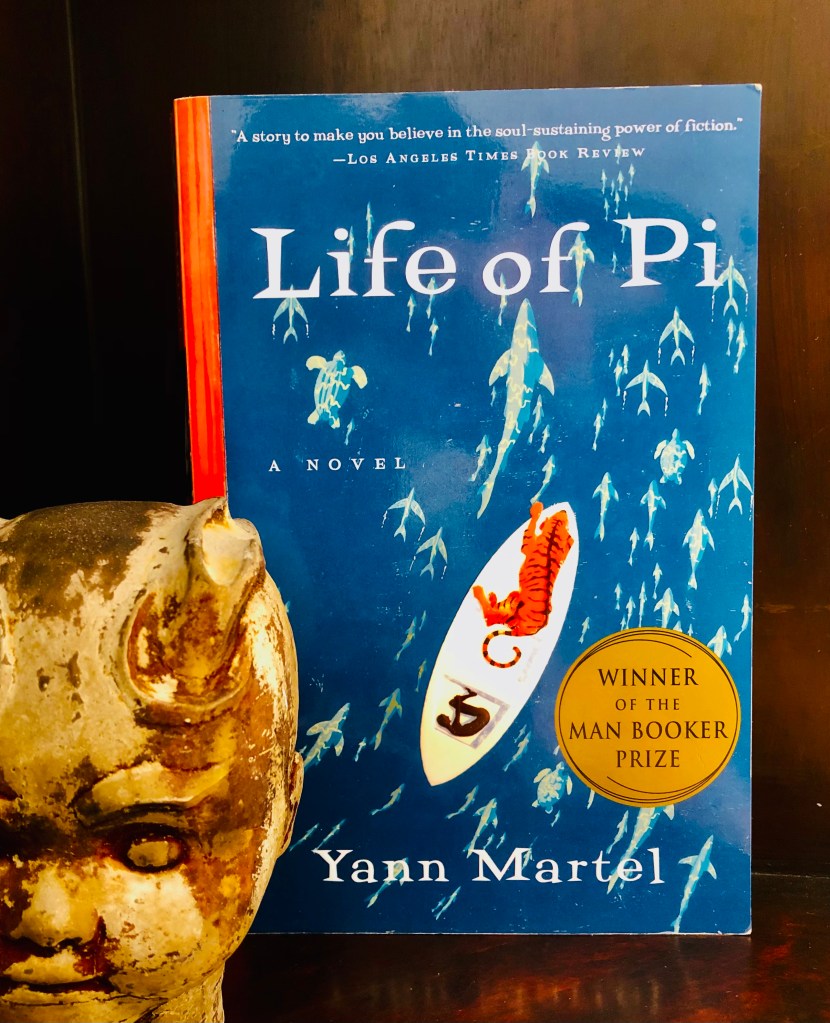
Life of PI

By Yann Martel

ALL POSTS CONTAIN SPOILERS, BUT THIS POST CONTAINS SERIOUS SPOILERS

I think ‘Life of Pi’ might have the most wonderful ending of any novel I’ve ever read.

I first read ‘Life of Pi’ years ago, soon after it came out. I would have described it as a great read, if not a great book. I thought it was beautiful, but significant mostly for its for its breathtaking premise. I would have said it should be celebrated primarily for the novelty of its plot.

Which plot: Pi Patel is born and raised in Pondicherry, India, where his father is the local zookeeper. Pi grows up in the Pondicherry Zoo, among the animals, a serious and happy little boy with a religious bent: he becomes, entirely without his parents’ knowledge, a practicing Hindu, Christian, and Muslim.

When Pi is twelve years old, his parents decide to leave India and emigrate to Canada. The family boards a cargo ship, the Tsimtsum, along with many of their animals which are destined for zoos all over the world. En route, however, the Tsimstum sinks, drowning Pi’s entire family and leaving him stranded on a life boat with a hyena, an orangutan, and a 450-pound Bengal tiger named Richard Parker.

‘Life of Pi’ is the story of a sweet-hearted and devout little boy surviving an ordeal: 277 days at sea with a tiger for a shipmate. It is about his grief, his suffering, his survival and his relationship with Richard Parker. And it’s a gorgeous story – lovely and funny and vibrant and humane, totally totally original. The ending, though, is complicated.

When Pi finally makes landfall in Mexico, starved, malnourished, anguished, the Japanese company which owned the Tsimtsum sends two agents to speak to him, to learn what might have caused the ship to sink. These two man flatly refuse to believe Pi’s story that he survived at sea with a Bengal tiger. Faced with their disbelief, Pi presents them with another story: when the Tsimtsum sank, four people made it to the life boats: Pi, his mother, the ship’s cook, and a young, injured sailor. The cook killed and ate the sailor first, then Pi’s mother.

“He killed her. The cook killed my mother…They were fighting. I did nothing but watch. My mother was fighting an adult man. He was mean and muscular. He caught her by the wrist and twisted it. She shrieked and fell. He moved over her. The knife appeared. He raised it in the air. It came down. Next it was up – it was red. It went up and down repeatedly…He raised his head and looked at me. He hurled something my way. A line of blood struck me across the face. No whip could have inflicted a more painful lash. I held my mother’s head in my hands. I let it go. It sank in a cloud of blood, her tress trailing like a tail. Fish spiralled down towards it until a shark’s long grey shadow cut across its path and it vanished. I looked up. I couldn’t see him. He was hiding at the bottom of the boat. He appeared when he threw my mother’s body overboard. His mouth was red. The water boiled with fish…I stabbed him repeatedly. His blood soothed my chaps hands. His heart was a struggle – all those tubes that connected it. I managed to get it out. It tasted delicious, far better than turtle. I ate his liver. I cut off great pieces of his flesh…So tell me, since it makes no factual difference to you and you can’t prove the question either way, which story do you prefer? Which is the better story, the story with the animals or the story without animals?” (p.317)

Over the years though, my mind returned again and again to that ending. It took on greater scope as I got older, came to seem much more profound, less literal, than it had when I first encountered it. Now, upon rereading it, I think I have become convinced that the ending is best, the most beautiful, part of the novel.

This choice is, of course, actually being presented to the reader. You understand that the choice is fictional, that neither story is ‘true’ the way, say, Watergate is true. But you also understand that you are being asked how you, the reader, personally see the world. Are you inclined to believe that a boy lived on a boat with a tiger? That two such different animals were able to coexist, to form a relationship, however unlikely and frightening it may have been? That, in fact, the fear and the unlikeliness are part of what made it so beautiful? Do you believe that it is possible, if not probable, that these moments of unlikely beauty happen all the time? That the world is large and strange enough to accommodate many such miracles?

Or do you believe the horror? Do you believe that this little boy was forced to watch, helpless, while his mother was killed and eaten? That he is, himself, a cannibal and a murderer?

There’s a lot at stake in this decision. I think that, essentially, what you are trying to decide is what a story is. You are trying to decide whether or not there is ordinary magic in the world, whether wonderful and fantastic things happen, or whether we invent them to adorn the bleak and unsparing horror of the human condition.

For “Life of Pi’, this is a religious question as well as a factual one. Recall that Pi is a religious child: he refuses to choose between Christianity, Hinduism, and Islam because he loves them all equally. For Pi, religion itself is an expression of love and gratitude for the world he lives in, which he considers beautiful and miraculous.

But, if his own story, beautiful and miraculous, is a fiction designed to hide from horror, then perhaps religion is, too. Perhaps all beautiful stories are lies we tell in order to hide our suffering from ourselves. Perhaps they are a way to layer meaning onto suffering, to justify it, to disguise it with beauty. But, perhaps, suffering has no meaning at all.

Without his story, Pi is victim of terrible accident, witness to brutality he did nothing to invite. Some random dice-roll of the universe dealt him a terrible fate, and it meant nothing. A little boy watched his mother eaten, and it meant nothing. The little boy himself resorted to monstrosity in order to survive, and it meant nothing.

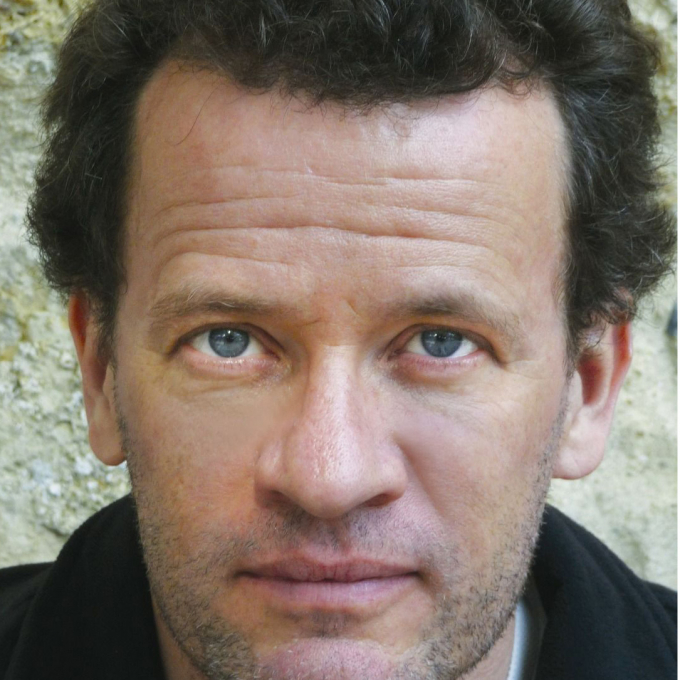
Yann Martel

With his story, he is a boy who experienced a miracle.

I suspect that most people feel an immediate affinity for one version of the story or the other, an instinctive and instant sense of what is “right” – I certainly do. I’ve talked to a lot of people about this book over the years. Most prefer the animal story – it is, after all, the better story. More, it is the better world: more beautiful, kinder, and more magical.

But others feel unshakably that the second story, the human story, the awful story, must be the “true” one. I am of the latter camp. Over the years, I have come to suspect that this is due to a sort of moral pessimism on my part: I think I believe that the second story must be true because it is more horrible. I have become convinced that reality will always trend to the worst possible outcome, that, if there is doubt, the bleakest story will turn out to be the truest.

I wish I was the other kind of person. I wish I believed the magical story, I wish that it didn’t seem obvious to me that the sadder story is the truer story. I wish I had better faith; I wish I had more magic.

The End of Everything (Astrophysically Speaking)

By Katie Mack

In general, I don’t write about science books here. I read them, but because I work as a scientist, my reactions to them tend to be analytical and not emotional: am I persuaded by this argument? Do I find the statistics sound? Does the evidence agree with my understanding of the field? I evaluate them informationally, not experientially, and because this isn’t a science blog, I tend to avoid writing about them.

However, the further afield I go from my own field (biology), the more of a tourist I become. By the time I get to physics, I am completely without expertise of any kind – I am reading purely for enjoyment, to learn something new, to goggle stupidly at the complexity of the world.

Which means that my reactions to ‘The End of Everything (Astrophysically Speaking)’ are entirely emotional. I have absolutely no ability to assess this information scientifically – it could be a pack of lies, for all I know. I’m just here for the ride.

Writing about science is really tricky. In science, accuracy is often a matter of considerable complexity, but complexity is antithetical to narrative. Therefore, works of popular science often reduce that complexity, simplifying for the sake of clarity. While this is frustrating for people who work in those fields, for whom the complexities are the point, it is required to make yourself understood to laypeople.

In the case of physics, this simplification usually means avoiding math. Most of the sort of far-out theoretical work involved in cosmology is all math; translations into common language are necessarily approximations at best. The more far-out the research, the more that this is true. And end-of-universe scenarios, advanced mathematical modeling of the Big Bang and other quantum phenomena, these things are as far-out and mathy as it gets.

Which makes what Katie Mack has done here all the more impressive. Mack is a cosmologist, and ‘The End of Everything (Astrophysically Speaking)’ is her survey of current theories about…the end of the universe. Will the expansion of the universe slow and reverse itself, bringing all matter collapsing back into itself, obliterating existence itself in a backwards Big Bang? Or does the expansion continue, pulling galaxies and solar systems and planets and finally matter itself apart? Or does the universe just dissolve into entropic chaos?

I loved this book. First of all, it’s a fucking great science book. Mack is an excellent science writer: she balances science, hard science, with clarity, and she balances it well. I can’t think of tougher material to translate for a lay-audience than extreme math-based astrophysics, and she nails it. I didn’t understand everything, but I understand a hell of a lot more than I would have if anyone else had tried to explain it to me.

“We already have astronomical all-sky surveys that are capable of measuring the positions and motions of billions of stars within our own galaxy. As the Big Rip approaches, we start to notice that the stars on the edges of the galaxy are not coming around in their expected orbits, but instead drifting away like guests at a party at the end of an evening. Soon after, our night sky begins to darken, as the great Milky Way swath across the sky fades. The galaxy is evaporating.

From this point, the destruction picks up its pace. We begin to find that the orbits of the planets are not what they should be, but are instead slowly spiraling outward. Just months before the end, after we’ve lost the outer planets to the great and growing blackness, the Earth drifts away from the Sun, and the Moon from the Earth. We too enter the darkness, alone.” (p. 113)

I want to highlight in particular Mack’s instinct for when to give context. Most science writers start from first principles, usually in the form of an intro chapter on the basic vocab, processes, or concepts which inform all the subsequent work. This can be really useful, but it’s often counter-productive. If you don’t understand why you’re learning the vocab, it can be hard to remember or understand it. Later, when you encounter the concepts for which you needed that intro, you have to keep going back through pages and reminding yourself of those intro concepts. It’s clunky.

Katie Mack

Mack doesn’t do that. She opts to give you context as you go, snagging you with a scary sentence or idea, then pulling back to give you the physics you need to parse it. Her rhythm is pretty perfect: she never front-loads the science too far in advance, and she never lets you go too far into a topic without the science you need to understand it. It’s really well done.

Excellent science writing aside, though, I also loved this book emotionally. It’s strangely refreshing, at this moment in time, to think about the end of the universe. Which is not to say that it is entirely unstressful, contemplating the obliteration not only of the entire world, but also of the physical laws which govern existence itself. It’s a little sobering, if I’m honest, a little bleak.

But it puts everything (and I do mean everything) into perspective: my plans for dinner, my irritating coworker, my next vacation, my relationship, my net worth, my own inevitable death, the inevitable deaths of everyone I love, of my very planet. In the end, I found it relaxing, zooming out that far. It’s hard to sustain local stress when you discover that, ultimately, the universe ends in perfect entropy.

It’s lovely, in a way. It throws your own life into sharp relief: there is no “forever”, not on a cosmic scale. No matter what you create, what you change in this world, what happens to you, what monuments you build, given a long enough timeline, every trace of your existence will vanish into nothing. When time itself has ceased to exist, legacy is a meaningless concept.

I will admit: I read this book on a beach, which probably informed my reaction, but, truthfully, this book left me feeling pleasantly, nihilistically zen: if we’re all just hurtling towards the heat death of the universe (which, thanks to Mack’s lucidity, I am 100% convinced we are), why worry? I see no reason why I should not have a little more fun with my own personal eye-blink of an existence.

There is relief in being able to credibly tell yourself that absolutely nothing matters. And it’s a lot easier to tell yourself that nothing matters when you have some science to back it up. So, my gift to you: nothing matters. I’ve read the book, it’s science, it’s official. Cheer up.